
Factory and site acceptance evidence
Conveyor FAT, SAT & Commissioning Checklist
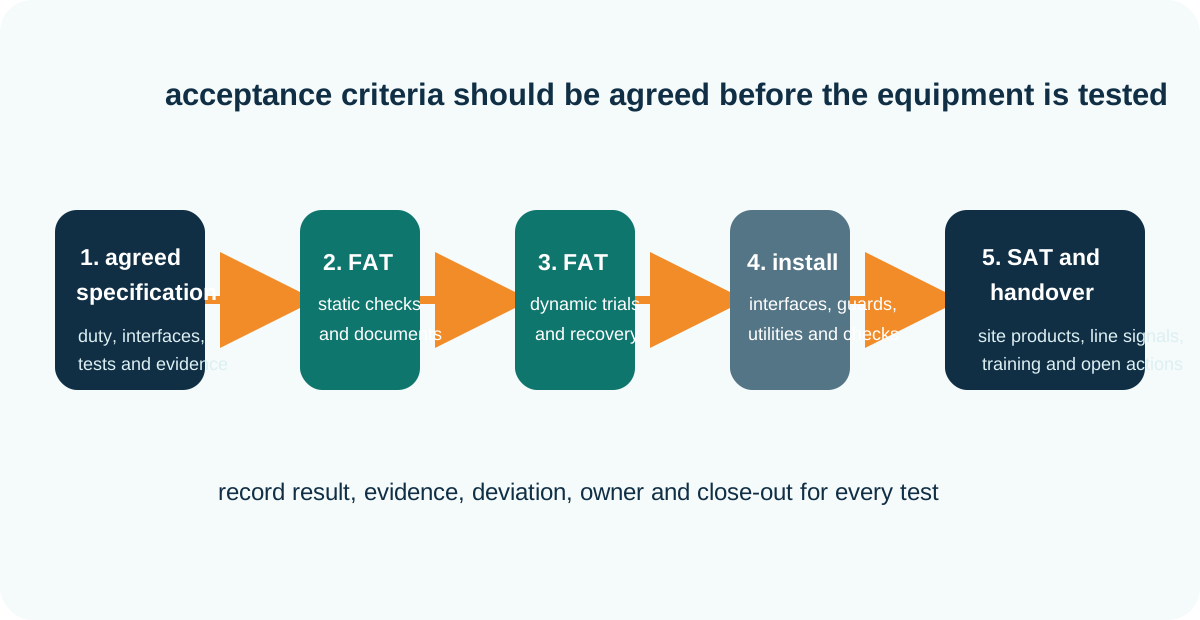
Agree test conditions and observable results before FAT, then repeat the site-dependent checks after installation, integration and commissioning.

Acceptance strategy
FAT proves the agreed factory-testable scope; SAT proves the installed system in its site context.
A factory acceptance test can check construction, dimensions, documentation, product flow, controls and planned fault states that are available before delivery. A site acceptance test confirms installation, utilities, real machine interfaces, final products, line signals and operator conditions. Neither stage should rely on a vague instruction to “run the conveyor”. Each test needs a requirement, method, expected result, evidence and a named decision route for deviations.
Test coverage
Use static checks, dynamic trials and controlled fault recovery.
| Test group | FAT evidence | SAT evidence |
|---|---|---|
| Construction and dimensions | Approved arrangement, principal dimensions, supports, guards and component identification. | Installed position, level, alignment, interface heights, fixings and access. |
| Product handling | Representative formats at agreed load, speed, starts, stops, transfers and accumulation states. | Actual site product through connected equipment under agreed production conditions. |
| Controls | I/O, modes, speed range, sensors, zone sequence, alarms and simulated machine handshakes. | Real line signals, upstream/downstream coordination, communications and recovery. |
| Safety functions | Available safety devices and documented tests within the factory scope. | Final guards, emergency-stop boundary, isolation, interfaces and validation by the responsible competent parties. |
| Abnormal conditions | Blocked product, sensor state, drive fault, loaded stop and planned restart scenarios. | Site-specific fault propagation, product retention, clearing method and controlled restart. |
| Documentation and training | Draft manuals, drawings, schedules, component data and open-action register. | Final revisions, training records, spare-parts information and accepted close-out. |
Downloadable test record
Record each result against one requirement and evidence reference.
The blank FAT/SAT CSV includes stage, test ID, requirement, method, expected result, actual result, status, evidence and approver. It can be filtered for open actions and retained with the final technical documentation.
Download FAT and SAT checklist
Use the design workbook to establish the test basis, the I/O guide for interface tests and the site survey checklist before installation.
Fault and recovery testing
Prove what the line does when normal flow is interrupted.
Planned tests may include a downstream block, occupied accumulation zone, missing product confirmation, drive fault, sensor fault indication, emergency stop and loss of a run permit. Only create conditions that are safe, controlled and within the approved test method. Record the product position, controller state and restart sequence so a pass means more than the motor stopping.
- Prepare the safe methodDefine the fault to be simulated, excluded hazards, responsible person and stop criteria.
- Record the starting stateCapture products, modes, setpoints, signals and software revision before the test.
- Initiate the conditionCreate the approved fault without bypassing guards or required safety functions.
- Observe propagationConfirm which conveyor zones and neighbouring machines stop, hold or report the condition.
- Clear and resetUse the documented clearing method and verify authorisation, product state and restart order.
- Close the evidenceRecord result, deviation, corrective action, re-test and approval before handover.
Buyer questions
Conveyor FAT, SAT and commissioning FAQs
What is the difference between FAT and SAT?
FAT covers agreed tests possible at the supplier’s facility. SAT covers installation-dependent tests on site, including final interfaces, utilities, products and operating conditions.
How long should a conveyor be run during FAT?
The duration should be agreed from the duty and risk. It must be long enough to expose transfer, tracking, sensing, accumulation and thermal issues relevant to the project.
Can one sample prove all product formats?
Only when evidence shows it represents the full range. Normally the product set should cover the dimensions, mass, base, stability and sensing extremes.
Should safety tests be included?
Yes where they fall within the equipment and project scope, but required safety validation must be performed by competent people using the approved design and risk assessment.
What happens when a FAT item fails?
Record the requirement, observed result, evidence, corrective action, responsibility and re-test. Do not convert a failure to a pass through an undocumented verbal agreement.
When is commissioning complete?
When the agreed installation, control, product, safety, documentation, training and open-action requirements have been accepted by the authorised project parties.
Project review
Define acceptance before the test date.
Send the product range, control sequence, interfaces and required evidence so the conveyor FAT and SAT scope can be agreed with the project team.