
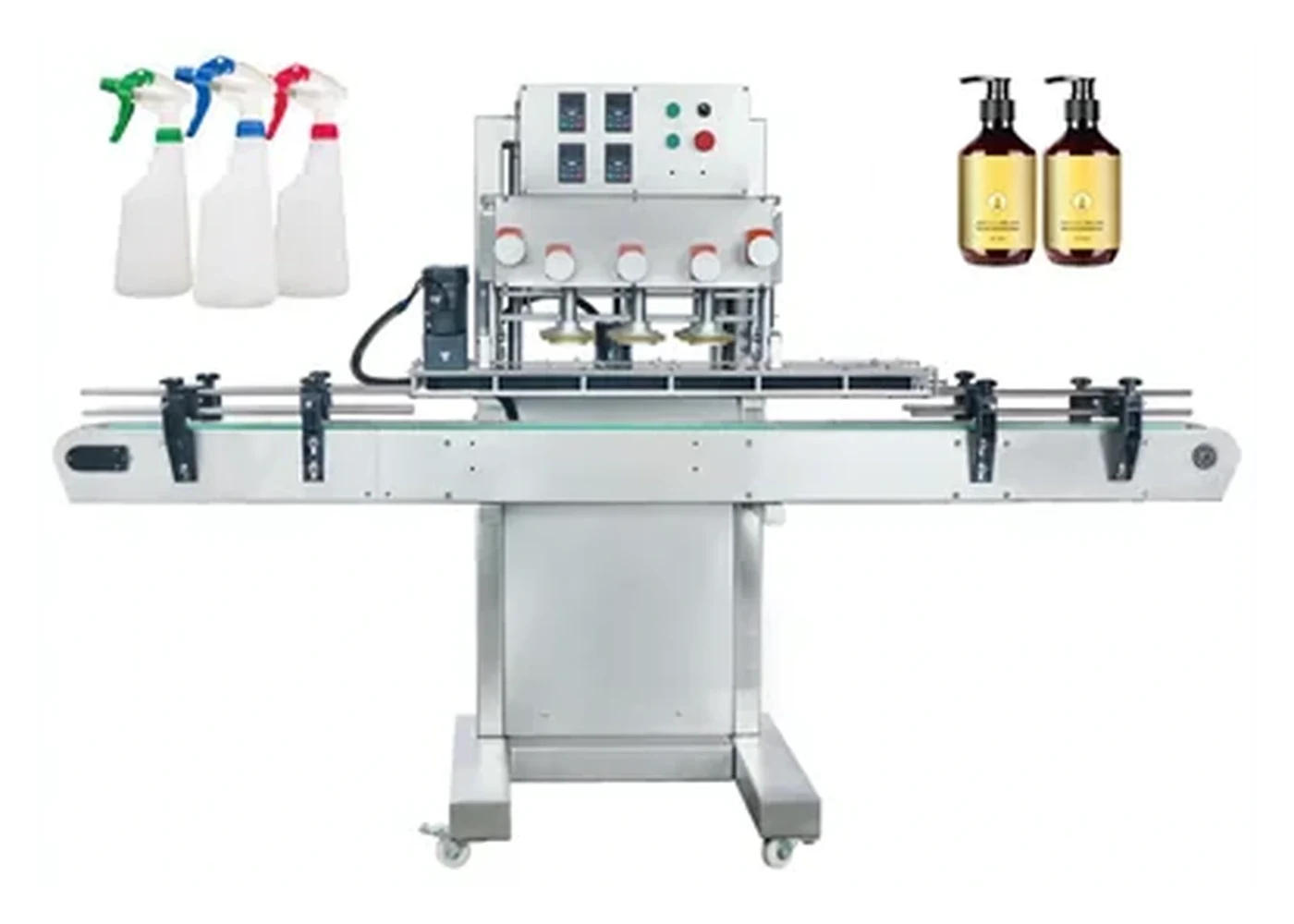
Packaging lines
Packaging Line Conveyors
Conveyor systems for filling, capping, labelling, coding, inspection and packing lines.
Good for linking filling, capping, labelling, coding and packing stages.
Explore packaging line conveyors →Cartons, totes and boxes
Powered roller conveyors move cartons, boxes, trays and totes under controlled drive. They are useful where flat-bottomed loads need transport, accumulation, routing or connection between packing and dispatch areas.
Conveyor type
Powered roller conveyors should be selected by load base, weight, roller pitch, route length, speed and whether products must stop, queue or accumulate. The roller pitch must support the smallest item without tipping or dipping between rollers.
For packing operations, powered roller systems can reduce manual handling and make product movement more repeatable. For warehouse and distribution routes, they can also support controlled flow into weighing, labelling, checking or dispatch processes.
Controls are a key part of the decision. Some projects only need simple powered transport, while others need zoned movement, sensors, stops, transfers and integration with existing equipment.
Best used for
Available routes
Conveyor type
Flat-bottomed cartons, totes, trays and boxes are typical. The base must be stable enough to bridge the roller pitch.
Yes. Powered roller conveyors can be configured with zones and controls to support accumulation, controlled release and reduced product pressure.
Check product weight, base condition, smallest footprint, route length, speed, accumulation need, environment and any transfer or merge points.
Need a shortlist?
We will help narrow the conveyor type, layout considerations and the details needed for a practical quotation.
Related conveyor options
Packaging lines
Conveyor systems for filling, capping, labelling, coding, inspection and packing lines.
Good for linking filling, capping, labelling, coding and packing stages.
Explore packaging line conveyors →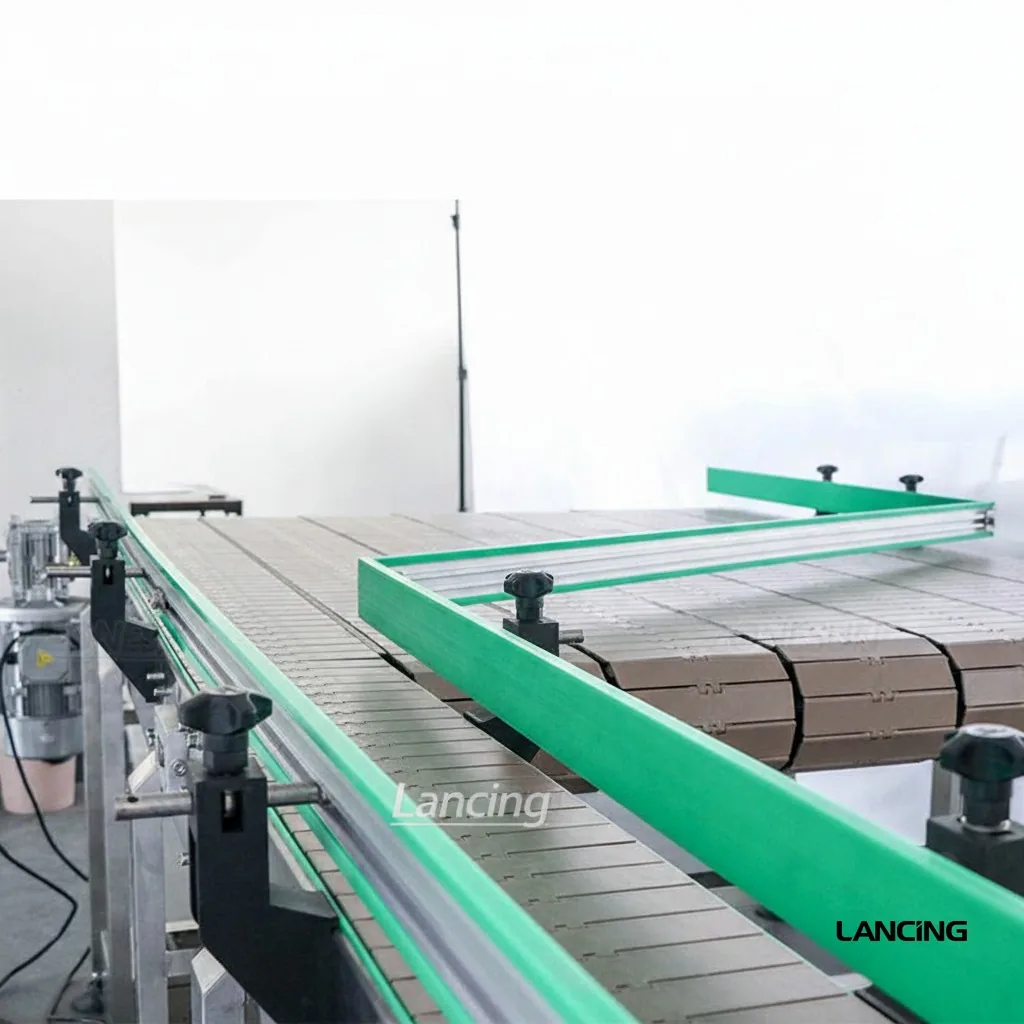
Bottle and jar handling
Slat, infeed, curved and accumulation conveyors for plastic bottles, glass bottles, jars and containers.
Good for stable movement of plastic bottles, glass bottles, jars and containers.
Explore bottle handling conveyors →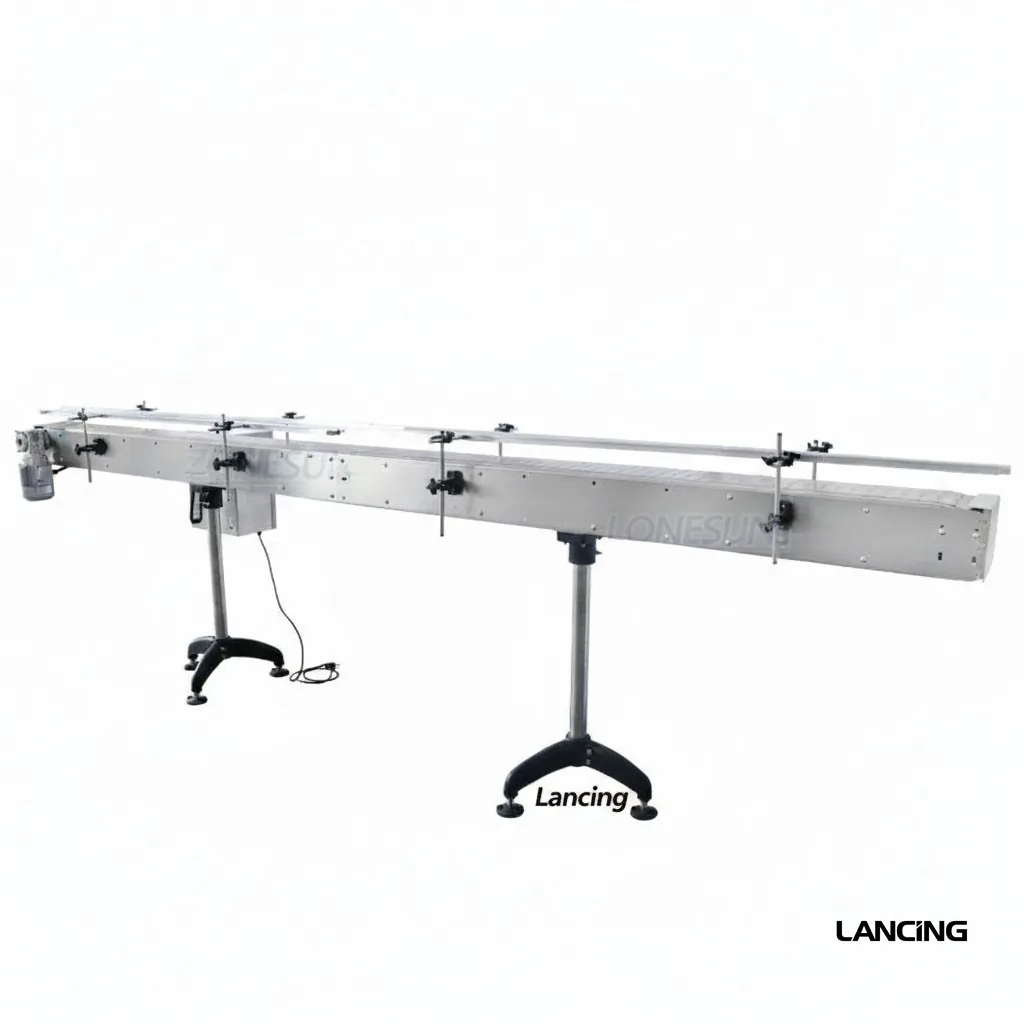
Cartons, trays and boxes
Powered conveyors for flat-bottomed cartons, trays, totes and box handling in production and packing areas.
Good for cartons, trays, totes and boxes in packing and dispatch areas.
Explore carton, tray & box conveyors →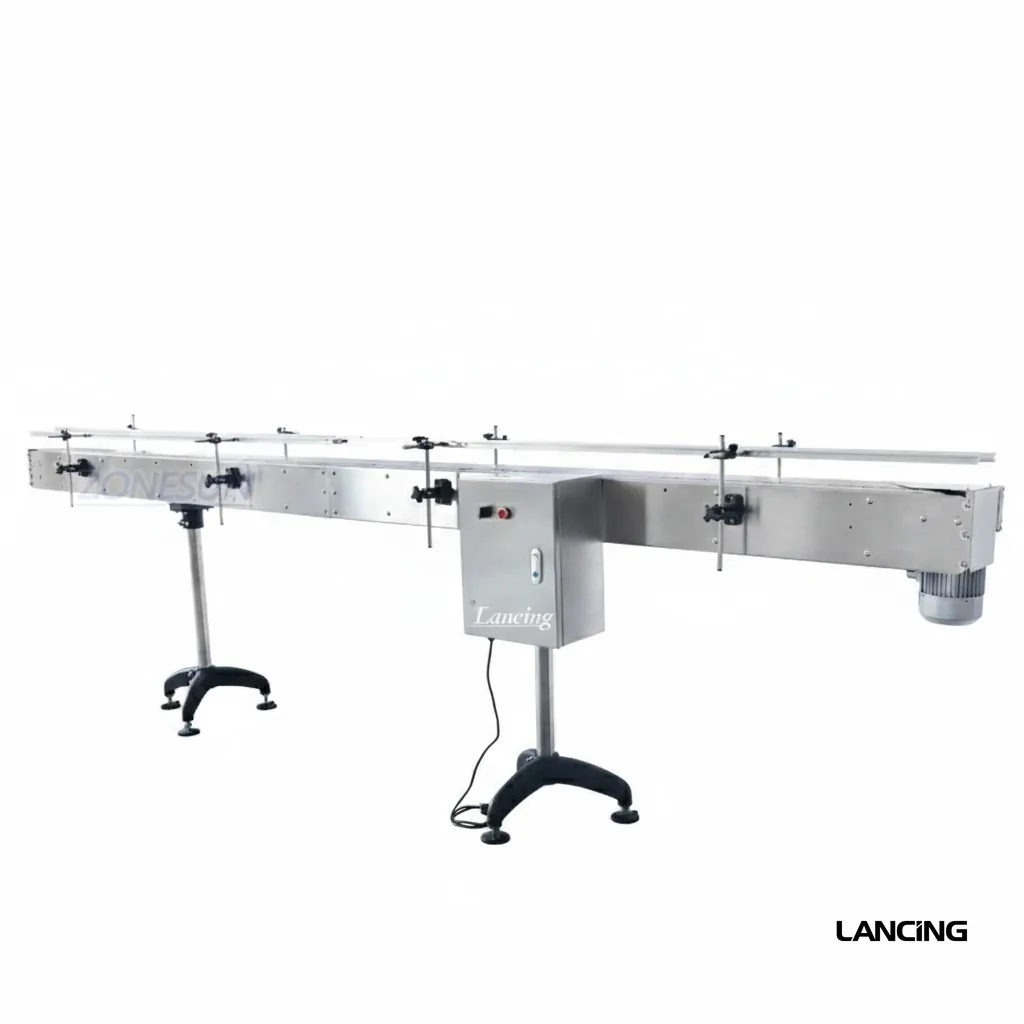
Buying guide
How to choose the right powered conveyor system by product, load, footprint, speed and line requirement.
Helps compare conveyor types before you request a quotation.
Explore powered conveyor buying guide →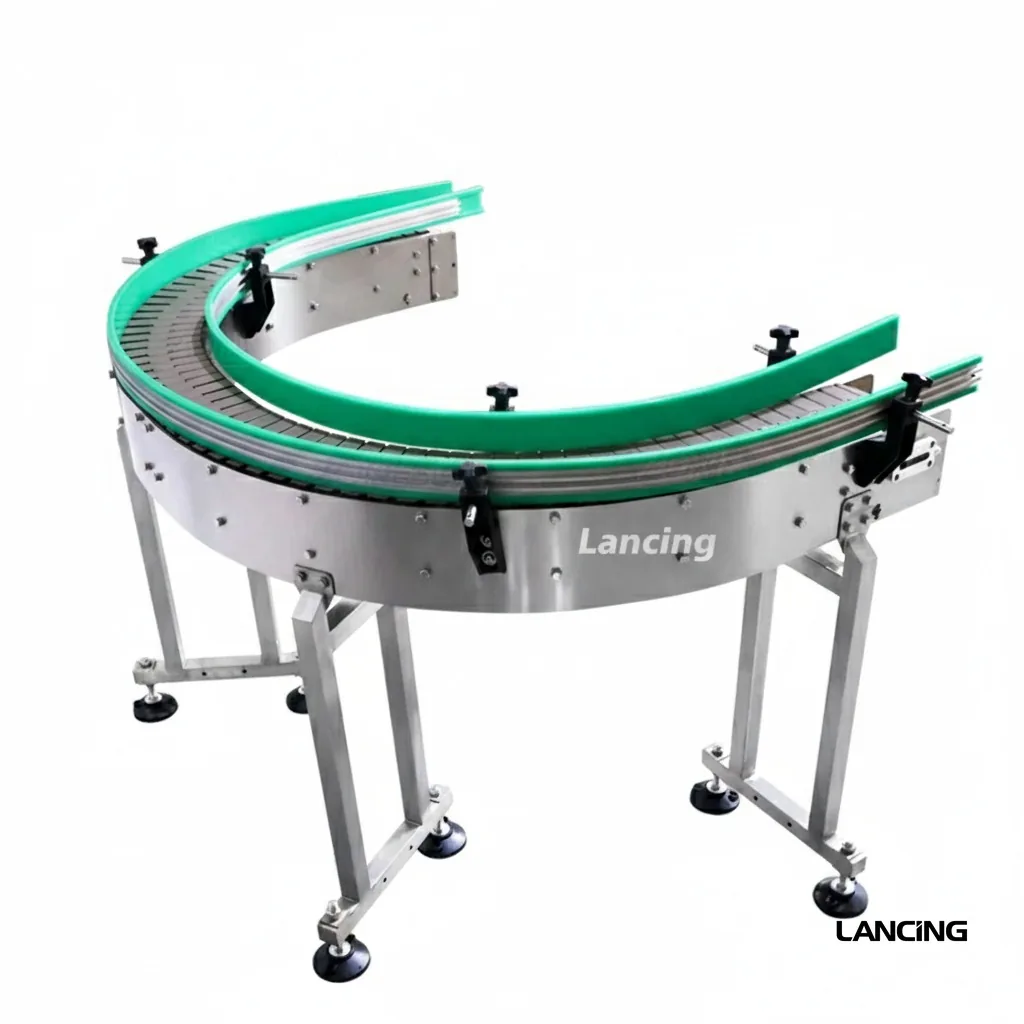
Layout checklist
A checklist covering footprint, access, transfers, bends, elevations, guarding, controls and future growth.
Helps check footprint, access, transfers, bends, heights and controls.
Explore conveyor layout checklist →Powered roller engineering
Powered roller conveyors are effective for cartons, trays, totes and boxes when the load has a stable underside that can bridge the rollers. The smallest load and the least rigid base normally decide the roller pitch, while total mass, distribution and accumulation logic decide roller and drive capacity.
A recognised planning principle is to keep at least three rollers beneath the load. As an initial geometry check, the roller pitch should therefore be no greater than one third of the shortest stable base length. Final pitch must also satisfy roller load capacity, base stiffness, impact and transfer requirements.
Do not divide total load evenly without checking reality. A tote with feet, a bowed carton or a heavy item with an offset centre of gravity can load only part of the roller face. Provide the actual underside geometry and the position of concentrated loads.
Motorised zones, sensors and controls can hold and release loads with reduced contact pressure. Define whether loads may touch, the required queue length, release sequence and how faults or downstream stops should propagate through the system.
Side transfers, pop-up units, merges and module joints introduce support gaps. Check the smallest base, roller orientation, product skew and the transition into any weighing, labelling or packing process.
| Input | Design effect | Verification |
|---|---|---|
| Shortest stable base length | Initial roller-pitch limit. | Underside drawing or physical sample. |
| Mass and contact points | Roller and frame loading. | Maximum mass and load distribution. |
| Queue length | Number and length of control zones. | Required buffer time and process rate. |
| Transfer function | Roller orientation, gap and drive logic. | Layout and sequence description. |
| Environment | Roller, bearing, frame and electrical selection. | Dust, moisture, cleaning and temperature conditions. |
A flexible pouch, small component or irregular base may need the continuous support of a belt conveyor. Bottles and jars that require continuous side guidance may suit a slat-chain conveyor. For controlled queuing, see the accumulation conveyor options and roller-pitch calculation method.
Three support points provide a practical starting point for smooth travel and reduce the risk of a load dipping between rollers. More may be required for heavy or uneven loads.
Only if the base is sufficiently rigid and supported. A belt conveyor may be better when the base bows or catches between rollers.
It is a controlled arrangement that holds loads in zones and releases them without relying on continuous product-to-product pressure.
It is normally related to the longest load, required gap, sensor position and release logic, then confirmed against the control system.
Check base support, load orientation, roller or belt interface, transfer force, guards, sensor logic and recovery from a stalled load.
Engineering review
Send the full product range, route, output and interface details so the conveyor can be assessed under realistic operating conditions.
Roller duty and zoning
A powered roller conveyor may contain several operating duties within one route. A transport section moves a supported load continuously; an accumulation section controls spacing and release; a workstation section may hold the load at a repeatable position; and a transfer section changes the direction or supporting surface. Each duty needs its own load, sensor and control definition.
| Duty | Evidence required | Key review |
|---|---|---|
| Continuous transport | Maximum loaded mass, underside contact pattern, speed range and route. | Roller capacity, drive arrangement, frame loading and stable tracking. |
| Zoned accumulation | Minimum and maximum load length, required buffer positions, release gap and downstream recovery rate. | Zone length, sensor position, pressure condition and sequence after a stop or fault. |
| Workstation or stop | Required datum, operator task, hold time and any external load applied to the product. | Positive stop, ergonomic access, guarding and whether rollers may remain driven. |
| Transfer | Load base, roller pitch, gap, height, direction change and support during handover. | Whether the load remains supported and square while moving between mechanisms. |
The shortest stable underside dimension provides an initial geometry check, commonly by aiming for support on at least three rollers. Final pitch must also consider the actual mass distribution, roller capacity, underside stiffness, damaged packs, wheel or foot positions and the transfer at each end. A tote that is rigid when empty may deflect differently when loaded.
Acceptance should cover normal flow, downstream stop, queue formation, controlled release, sensor obstruction, power interruption and restart. Confirm which zone retains a load, how gaps are re-established and what happens when a product is shorter than the nominal zone. These tests expose control issues that a simple no-load run cannot show.
Check the initial support geometry in the engineering calculations, plan each handover with the transfer-layout guide, and compare with belt conveyors where the product underside needs continuous support.
Zone control and recovery
Zone length, roller pitch, sensor position and release logic must suit the shortest rigid base and the required product gap. Agree whether products may touch, how a blocked downstream state propagates upstream and how occupied zones recover after a fault or power interruption.
Document ready, blocked, fault, reset and zone occupancy in the sensors and controls guide.
Record false detections, release failures and product bridging with the diagnostic workflow.
Compare powered zones with manual or gravity movement in the motorised vs gravity guide.
Powered roller buyer questions
Powered rollers work best when the product base and the control method are considered together. A stable carton on a transport section may behave differently when stopped, released or transferred between zones.
There is no safe universal minimum product length for powered rollers. Suitability depends on the load-bearing base and the roller pitch, not only the product envelope. The product must remain supported during normal travel and across transfers, including when a corner is damaged or the base is flexible.
Use the smallest actual base dimension for an initial pitch check, then verify load distribution and component ratings against the selected roller system and a representative trial.
The roller-pitch calculation is an initial geometry check, not a capacity approval.
Zoned powered roller control is useful when products must stop, queue or release without uncontrolled contact pressure. Continuous drive may be simpler for steady transport where stopping products on the live rollers is acceptable. The decision depends on product base, required spacing, accumulation behaviour, sensing reliability and how the line should respond to blocked equipment.
Zone length and release logic should be defined from the real product and operating sequence rather than copied from another line.
A carton can stop while rollers turn if too few rollers support the base, the underside is soft or damaged, drive is not reaching the required rollers, friction is lost, the load is skewed, or a transfer lip and guide create more resistance than the roller drive can overcome. The symptom may also be product-specific rather than a general conveyor fault.
Record the carton condition, position, load, zone state and whether the fault occurs during travel, release or restart before adjusting the drive.
Test the least rigid base at the maximum credible product load and at every transfer, stop and restart position. Observe sag between rollers, corner catching, skewing, sensor detection and whether the carton remains driveable when it is not perfectly square. A pristine empty carton is unlikely to represent a worn or heavily loaded production pack.
Where roller support is marginal, continuous belt support or an assisted transfer may be more suitable.
Use the product sample and trial guide.
See the powered conveyor questions hub for related controls and acceptance guidance.
Motorised roller architecture
A motorised roller, linked idlers, product sensor and controller form a functional zone. Zone length must suit the product envelope, support, sensing and release rule; it should not be chosen only from a convenient frame dimension.
| Zone question | Evidence to provide | Acceptance condition |
|---|---|---|
| Can the product remain supported? | Shortest rigid base, underside condition and roller-pitch trial. | No stall, rocking or bridging through the full zone and transfer. |
| Can occupancy be detected? | Least favourable colour, label, transparency, orientation and background. | Repeatable detection under normal lighting, vibration and contamination. |
| When may the zone release? | Downstream-ready state, release mode, required gap and blocked response. | Controlled transport, full accumulation, restart and fault recovery. |
Use the 24V motorised roller conveyor guide for zone architecture, zero-pressure accumulation and a downloadable zone schedule.