
What details help with a conveyor sizes and widths quote?
Product size, weight, conveyor route, start and discharge heights, speed or output and photos of the existing area all help produce a more accurate conveyor recommendation.
Conveyor sizing guide
Guide to choosing conveyor width, length and working height for powered conveyor systems in production and packaging areas.
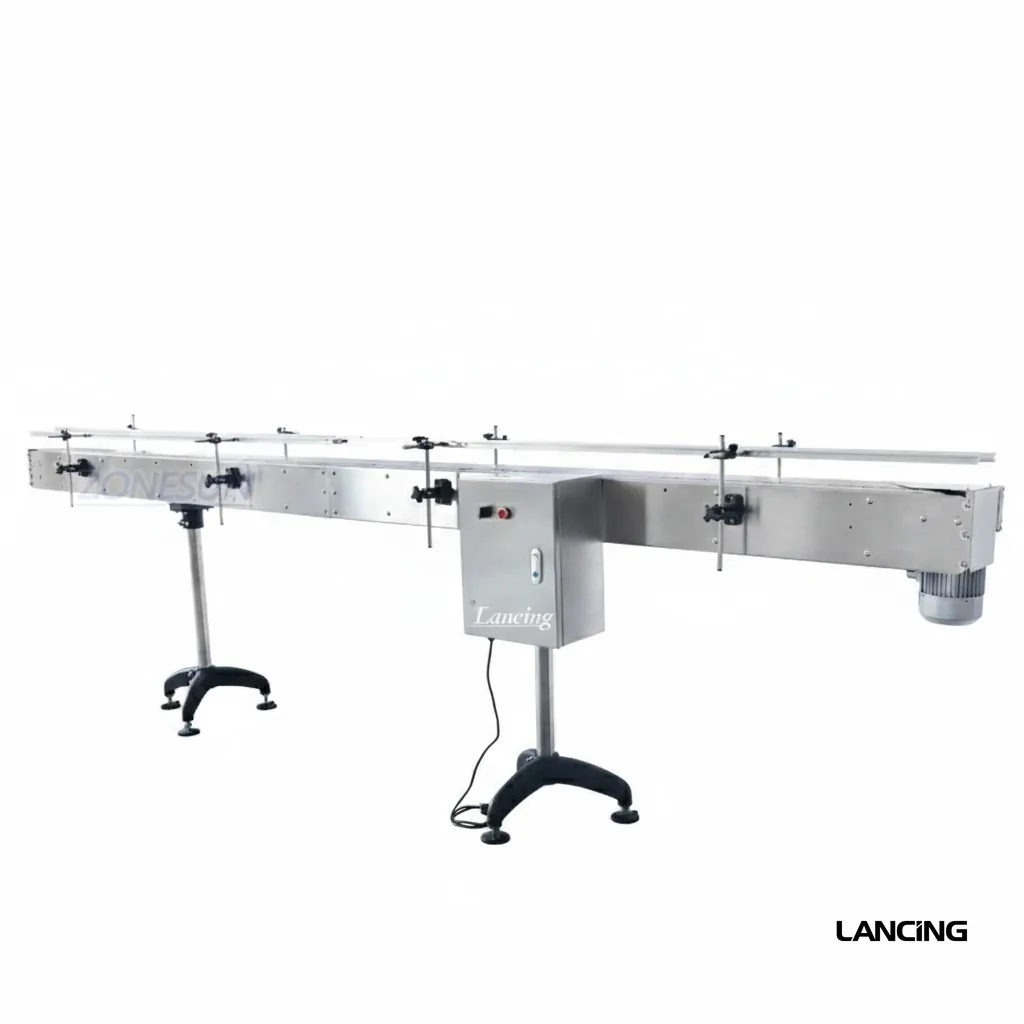
Planning support
Conveyor size should be chosen around the product and the people working around the line, not just the space left on the factory floor.
A conveyor that is too narrow may cause instability, while a conveyor that is too wide can make side guiding and operator access harder than necessary.
The useful starting point is the largest product size, the required route and the work that happens alongside the conveyor.
Application detail
Application detail
Common questions
Product size, weight, conveyor route, start and discharge heights, speed or output and photos of the existing area all help produce a more accurate conveyor recommendation.
Yes. Conveyor layouts can usually be planned around existing machinery, provided the machine height, infeed and discharge positions and access requirements are known.
Powered Conveyors UK supports UK production, packing and handling projects from enquiry through specification and quotation support.
Related conveyor information
Related
Continue planning the conveyor type, layout and quote details for this project.
View details →Related
Continue planning the conveyor type, layout and quote details for this project.
View details →Related
Continue planning the conveyor type, layout and quote details for this project.
View details →Need a conveyor quote?
Send the basic product, route and output details and we will help identify the right conveyor options.
Dimension method
Conveyor width, roller pitch, guide range and transfer detail should be checked against the full product envelope. Record the smallest and largest stable base, any protruding feature, the position of the load centre and the tolerance expected from packaging or manufacturing.
pitch ≤ stable base length / 3
This reflects the three-roller support principle and must be followed by roller load and base-rigidity checks.
Start from the widest actual product and add the guide, clearance and changeover envelope required by the application. Do not apply a universal allowance.
Check the smallest leading edge and support geometry in plan and elevation, including any recessed base or flexible underside.
See the engineering calculation guide and transfer drawing examples.
Dimension review
Include underside photographs, mass, guide contact restrictions and transfer heights so width and support can be reviewed correctly.