
Belt tracking and fault evidence
Conveyor Belt Tracking: How to Diagnose Belt Drift Safely
Find where belt movement begins, separate empty and loaded behaviour, and change one controlled variable at a time rather than chasing the belt from pulley to pulley.

Direct answer
What is conveyor belt tracking?
Conveyor belt tracking is the controlled alignment of a moving belt so it runs consistently within its intended path. A belt that moves towards one edge is showing the effect of alignment, loading, tension, contamination, belt construction or external side force. The useful diagnostic question is where that movement first becomes visible and under which operating condition, not simply which adjustment will move the belt back.
Tracking work should follow the conveyor and belt manufacturer’s instructions. Before access, inspection or adjustment near dangerous parts, apply the site’s approved safe-isolation and risk-assessment procedure. HSE maintenance guidance explains the need to stop moving plant, isolate energy and lock off where necessary. Read HSE maintenance guidance.
Observation map
Where should belt drift be observed?
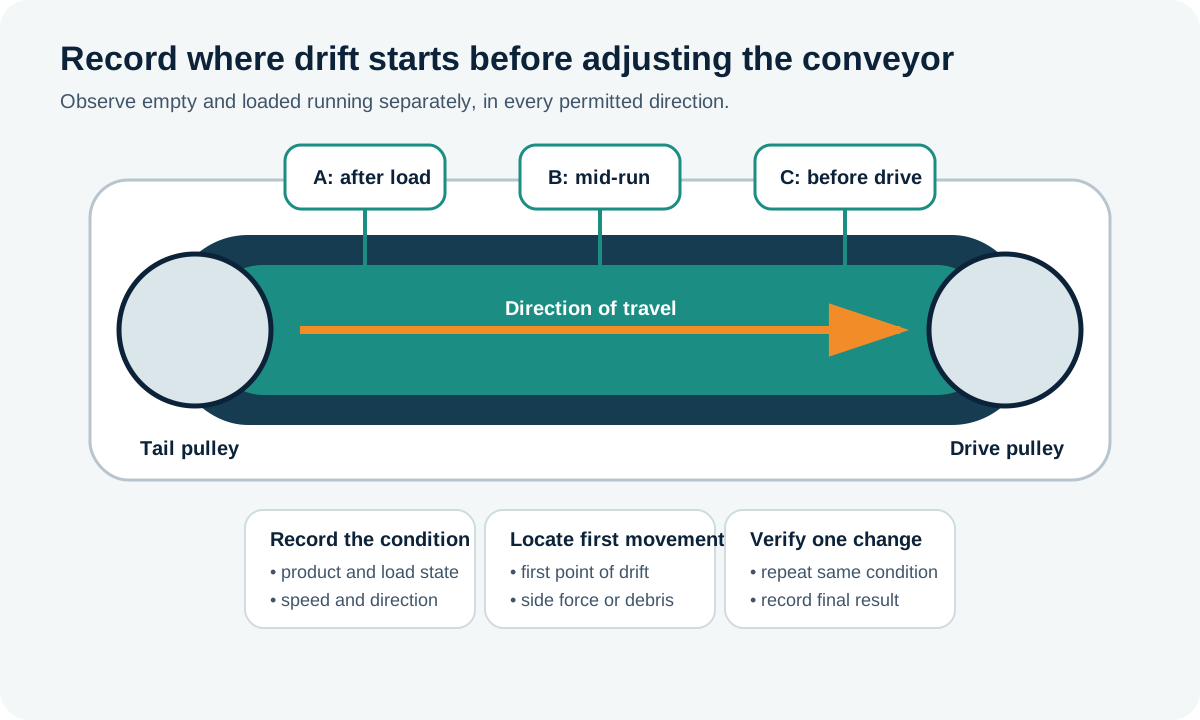
Mark repeatable observation stations after the loading or transfer point, through the central run and before the drive. Record the edge position at the same stations during each test. The first station that changes is usually more informative than the point where the belt finally reaches a frame or guard.
Diagnostic sequence
How do you diagnose conveyor belt mistracking?
Diagnose conveyor belt mistracking by preserving the original condition, identifying the first point of movement and testing one controlled cause at a time. A repeatable sequence avoids compensating for one fault with a second misalignment.
- Record the symptom before interventionNote direction of travel, speed, product, loading position, drift direction, time to drift, alarm state and recent work.
- Make the equipment safe for the required inspectionFollow the site procedure for stopping, isolation, stored energy and access. Do not use an emergency stop as an isolation method.
- Check the fixed referenceInspect frame condition, supports, pulley and roller security, contamination, belt damage and any obvious change from the approved arrangement.
- Observe empty runningUse the same direction and speed long enough to establish whether the belt remains centred or moves progressively.
- Observe representative loaded runningCheck whether off-centre loading, a side transfer, product guide or frame deflection changes the result.
- Test one justified changeRecord the original setting, the reason for the change and the expected effect. Follow component-specific instructions rather than generic trial-and-error adjustment.
- Verify the full dutyRepeat empty, loaded, start, stop and permitted reversing conditions. Confirm that the correction has not created edge contact, excessive tension or a new transfer problem.
Symptom-to-evidence matrix
What causes a conveyor belt to run to one side?
A belt can move to one side because of frame or pulley alignment, unequal forces, uneven loading, contamination, belt condition or an unsuitable tracking arrangement. The pattern below helps decide what evidence to collect before a competent adjustment is made.
| Observed pattern | Evidence to record | Areas requiring competent inspection |
|---|---|---|
| Drifts the same way empty and loaded | First point of movement, direction, speed, pulley and roller condition, belt edge condition. | Frame squareness, pulley/roller alignment, belt construction, tension distribution and fixed tracking features. |
| Runs centrally empty but drifts when loaded | Product position, load distribution, transfer angle, guide contact and frame movement. | Off-centre loading, lateral product force, support deflection, transfer geometry and uneven contamination. |
| Direction changes when the conveyor reverses | Result in each direction, permitted duty, pulley arrangement and adjustment history. | Whether the installed tracking method is suitable for reversing duty and whether the fixed geometry is symmetrical. |
| Problem begins after cleaning | Cleaning method, remaining moisture or residue, roller/pulley contamination and reassembly. | Unequal friction, trapped debris, moved components, retained liquid and belt condition. |
| Problem begins after belt replacement or maintenance | Part numbers, belt splice or joint, tensioning record, component positions and pre-work photographs. | Correct belt, joint quality, installation alignment, tensioning method and disturbed supports or guards. |
| Edge damage appears although drift is intermittent | Marks on the frame or guard, operating state, product jam history and exact damage location. | Temporary side force, start-up movement, jam recovery, guide contact, belt camber or a condition that occurs only under peak load. |
Common specification mistakes
Which belt-tracking actions can make the problem worse?
Repeatedly adjusting several pulleys, increasing tension without a defined target, or using product side guides to force the belt can hide the original cause and introduce premature wear. A tracking feature cannot compensate indefinitely for a twisted frame, uneven loading or contamination.
- Do not move several adjustments before one result is verified
- Do not assume the drive pulley is the correct first adjustment point
- Do not use a belt guide as a substitute for sound conveyor geometry
- Do not assess a production fault only with an empty conveyor
- Do not change tension by feel when the approved method requires measured settings
- Do not leave altered guards, sensors or access arrangements undocumented
For broader symptom capture, use the conveyor troubleshooting and fault-diagnosis guide. For planned checks and safe maintenance boundaries, use the conveyor maintenance checklist.
Buyer and maintenance questions
Conveyor belt tracking questions
Why does a conveyor belt track correctly when empty but not with product?
The product may introduce off-centre load, frame deflection, lateral force at a transfer or unequal contamination. Reproduce the loaded condition and locate the first point where the belt position changes.
Should belt tension be increased to stop mistracking?
Not automatically. Incorrect tension can damage the belt or components and may not correct the root cause. Use the belt and conveyor manufacturer’s approved tensioning method after alignment, loading and contamination have been reviewed.
Can side guides keep a conveyor belt centred?
Product side guides are intended to control the product, not to continuously steer the belt. Persistent belt contact with guides or frame edges indicates that the tracking cause still needs investigation.
Why does mistracking return after the conveyor has warmed up?
Temperature can change belt dimensions, component expansion, contamination behaviour or load conditions. Record the cold and warm state, time to failure and any accompanying drive or product change.
How long should a tracking correction be tested?
Long enough to cover the operating states that previously produced the fault, including representative load, start, stop, speed and direction. One short empty run is not a meaningful acceptance test.
When should belt tracking work be referred to a specialist?
Refer the work when the approved adjustment method is unknown, the belt or structure is damaged, guarding or safety functions are affected, the conveyor must run in a condition outside its design, or controlled changes do not produce a stable result.
Technical review
Send the repeatable tracking condition.
Provide the conveyor reference, belt type, direction, speed, product, drift pattern, recent work and safe photographs or video so Lancing can understand the fault before discussing next steps.