
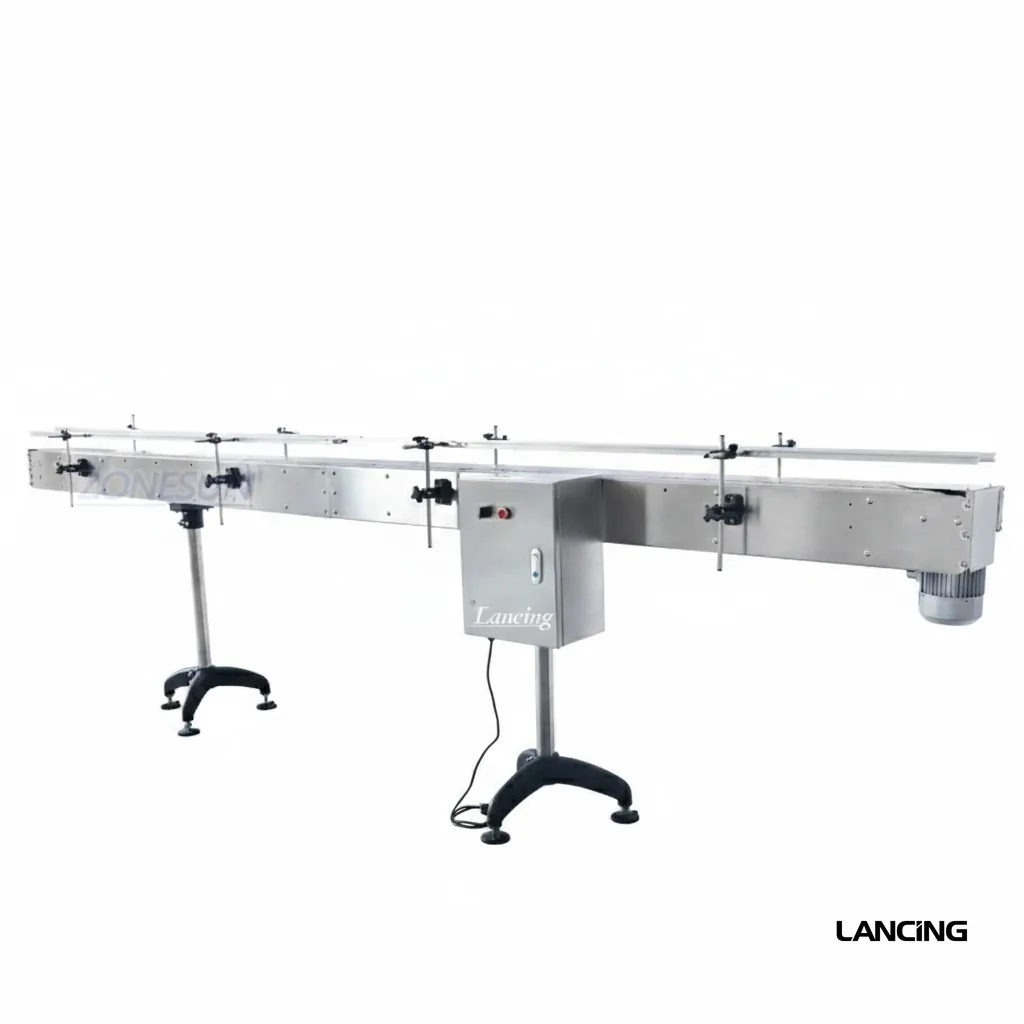
Conveyor type
Belt Conveyor Systems
Flat belt, food-grade, cleated and modular belt conveyors for product transfer, packing and line linking.
Good for cartons, packs and components that need full-base support.
Explore belt conveyor systems →Machine-to-machine conveyor planning
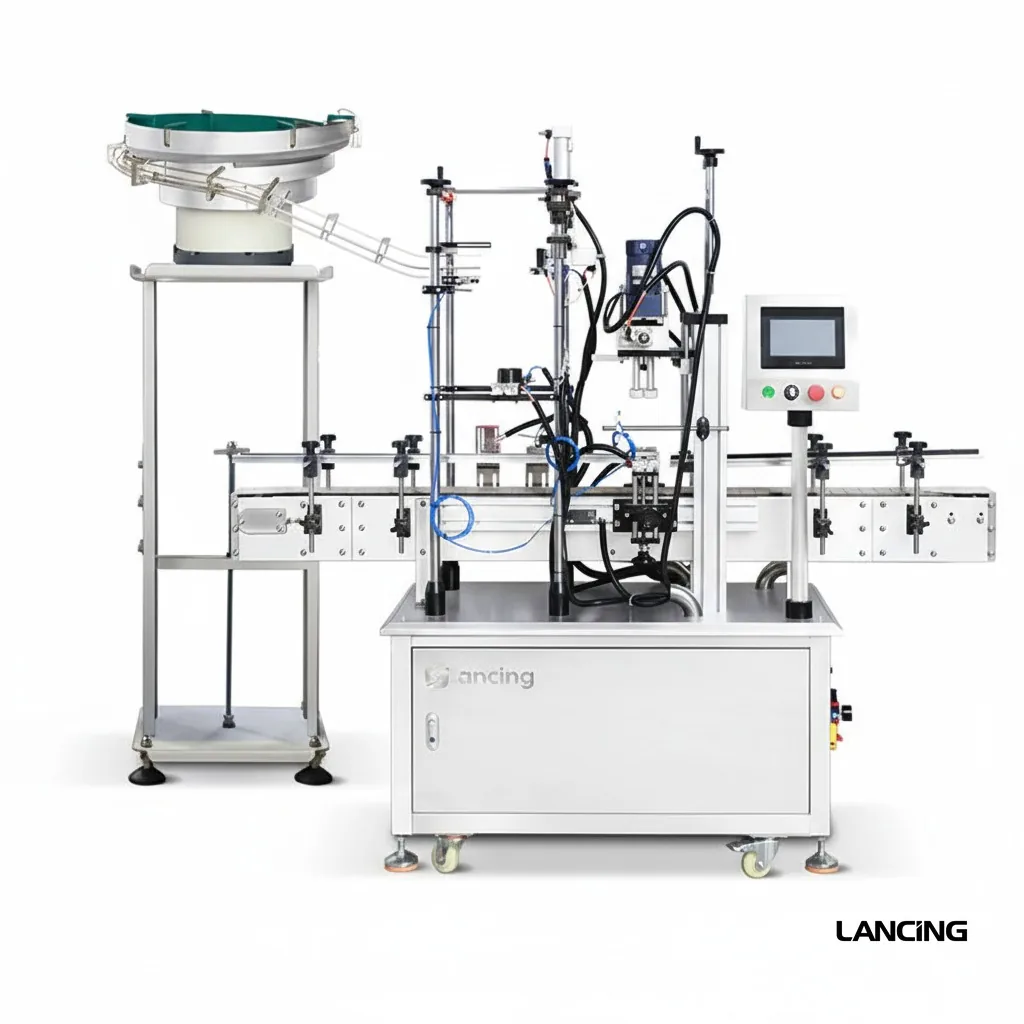
Conveyor line integration is the process of making product flow reliably between machines, operators and packing stages. It covers layout, transfers, speed matching, controls, guarding and access.
Line integration
Conveyors are the connective tissue of a line. A filler, capper, labeller or inspection machine may work well in isolation, but the complete line only performs when products move between stages without recurring stoppages.
Good integration checks physical alignment, product stability, timing, electrical controls, sensor positions, safety access and changeover requirements. It also considers how operators will load, inspect, clear faults and clean the area.
For upgrade projects, the best starting point is a list of the existing bottlenecks. Frequent jams, fallen products, poor spacing, manual lifting or blocked access usually point to specific conveyor layout improvements.
Best used for
Available routes
Line integration
It should be planned early, before machine positions are fixed. Late conveyor decisions often create access and transfer issues.
Yes. Many production issues are caused by poor transfer points, speed mismatch, missing accumulation or awkward operator access.
Provide a layout drawing, machine list, product samples, speed targets, stoppage points, utilities and access restrictions.
Need a shortlist?
We will help narrow the conveyor type, layout considerations and the details needed for a practical quotation.
Related conveyor options
Conveyor type
Flat belt, food-grade, cleated and modular belt conveyors for product transfer, packing and line linking.
Good for cartons, packs and components that need full-base support.
Explore belt conveyor systems →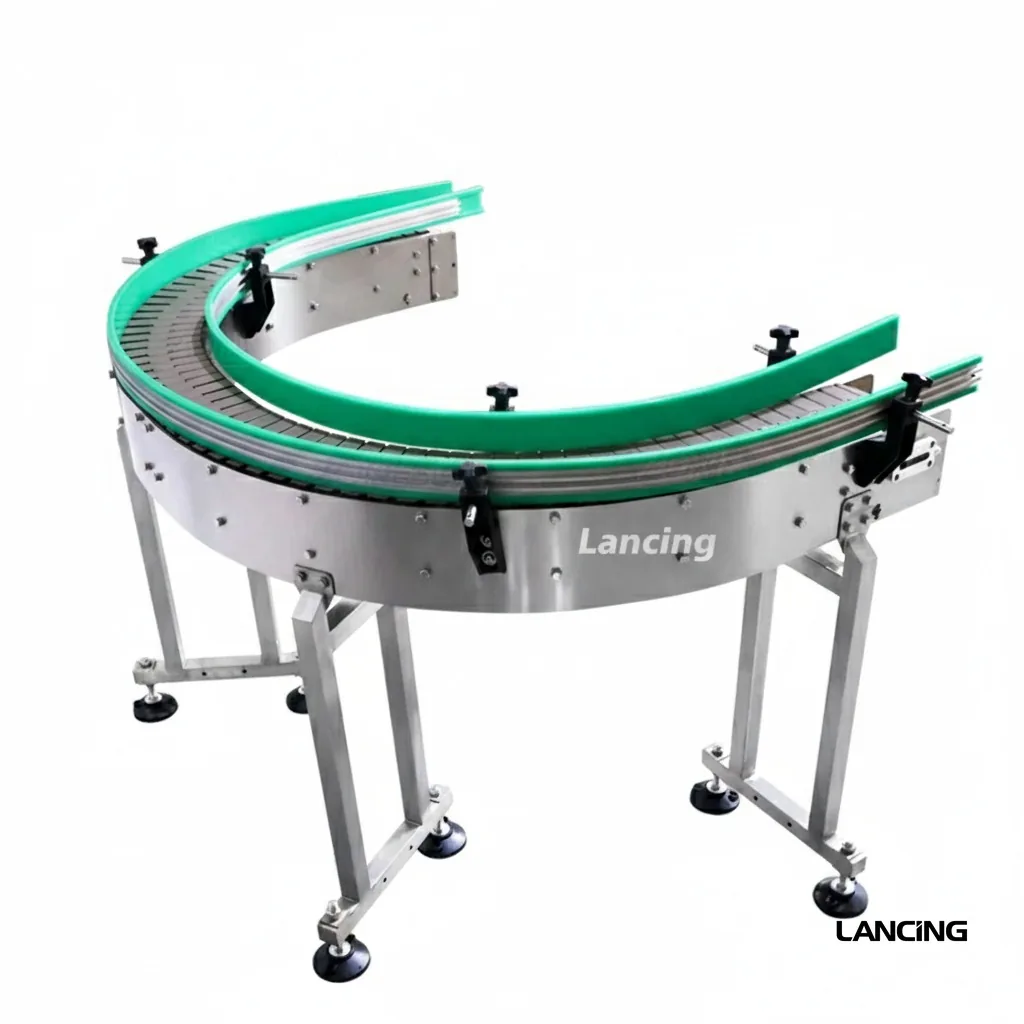
Conveyor type
Plastic slat, tabletop chain and stainless-frame conveyors for bottles, jars and container handling.
Good for bottles, jars and containers that need stable guided movement.
Explore slat chain conveyors →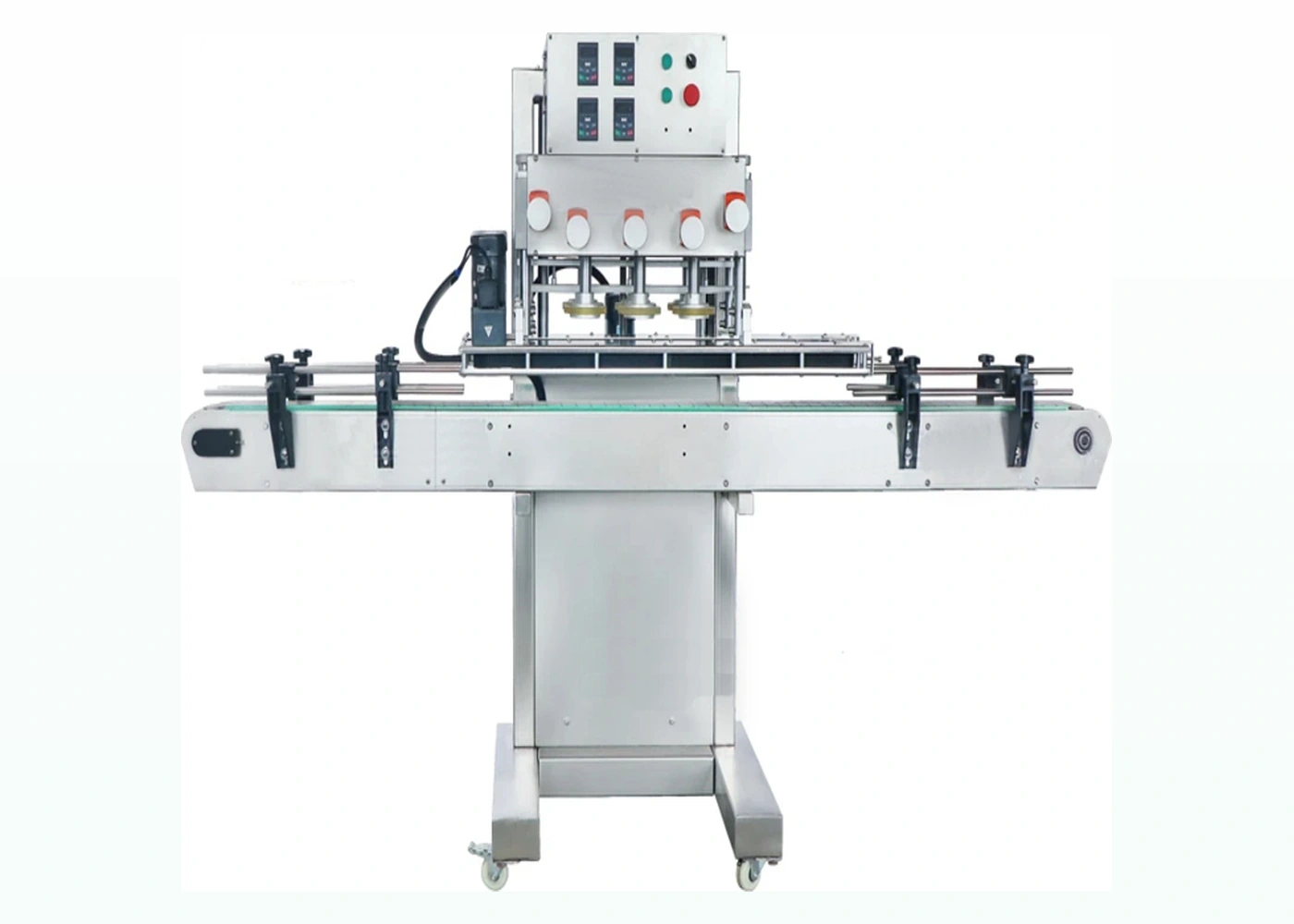
Conveyor type
Motorised roller conveyor sections for cartons, trays, totes, boxes and controlled product movement.
Good for cartons, trays, totes and boxes with a firm base.
Explore powered roller conveyors →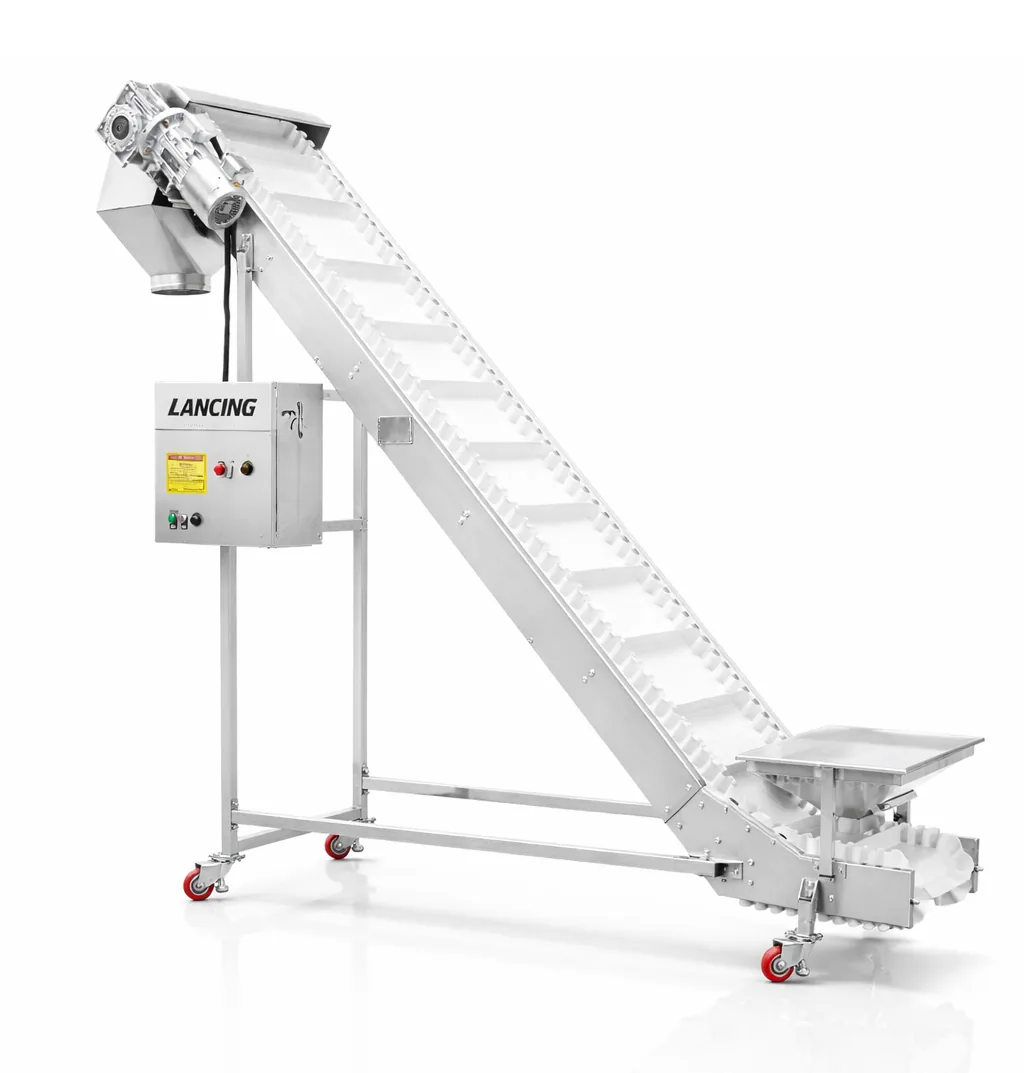
Conveyor type
Incline and elevator conveyors for moving packs between heights without disrupting line flow.
Good for moving products between heights while keeping the line flowing.
Explore incline conveyors →Integration definition
A conveyor can only deliver stable flow when the adjacent equipment, transfer geometry and stop/start sequence are defined. The integration brief should identify who owns each interface and how the line should behave during normal running, starvation, blockage, fault and restart.
| Interface | Data to agree | Acceptance observation |
|---|---|---|
| Mechanical | Top height, direction, support gap, guides and adjustment. | Smallest and largest products transfer without snagging or loss of control. |
| Product flow | Required queue, pitch, speed range and accumulation. | Representative products remain stable through start, stop and restart. |
| Controls | Ready, run, fault, stop, speed reference and sensor ownership. | Upstream and downstream equipment respond in the agreed sequence. |
| Safety | Guard boundaries, emergency stop, isolation and access. | Risk controls work across the combined interface. |
| Cleaning/maintenance | Access, removal routes, chemicals and drainage. | Routine tasks can be completed using the approved safe method. |
Where the scope expands into complete filling, capping, labelling or end-of-line machinery, use Packaging Lines UK so the combined line has a clear project owner.
Use the transfer detail guide, controls and safety guide and quotation configurator to prepare the interface data.
Interface review
Send the equipment list, layout, product range and required operating sequence so the conveyor interface can be reviewed as part of the working line.
Integration acceptance plan
For each equipment boundary, state the product handover, supports, guides, guards, field wiring, I/O, software action, isolation and responsible party. Link the interface to a test that can be observed during FAT or SAT. This prevents an open item being treated as someone else’s scope after installation.
Use the design workbook to control known and unknown data.
Use the I/O guide to define states and ownership.
Use the FAT/SAT checklist for testing and close-out.
Line integration questions
A conveyor interface is complete only when the mechanical handover, electrical boundary, control sequence, guarding boundary and acceptance evidence have named owners.
Each line signal should have one named source, one named receiver, a defined normal state and an agreed response if the signal or communication path fails. Ownership is a project decision: it may sit with the conveyor controller, the machine controller or a higher-level line system, but it should never be left to assumption at commissioning.
The schedule should identify who provides the field device, wiring, I/O, software, labels, testing and final approval.
Use the interface schedule guide.
Record top-of-surface heights, horizontal and vertical gap, product direction, usable width, guide alignment, support across the gap, relative speeds, adjustment range, mounting responsibility and the guarded boundary. The record should use a numbered interface so drawings, control schedules and acceptance tests refer to the same handover.
The smallest and least stable product should be checked at the interface because it often controls the support detail.
Recovery should follow a defined sequence that verifies the hazard is cleared, equipment is reset, product positions are understood and each machine is ready before automatic flow resumes. A normal machine fault, a blocked product and an emergency stop are different states and may need different reset permissions.
The sequence should avoid an unexpected simultaneous restart or an upstream release into a stopped downstream section.
The downstream-stop guide explains the normal blocked-line state.
A common speed command does not guarantee balanced flow because machines handle products at different pitches, dwell times, release patterns and stop-start cycles. Two surfaces can run at the same metres per minute while delivering different product rates or creating compression at a handover.
Line balance should be checked in products per unit time, product pitch, occupancy, buffer behaviour and recovery from short interruptions, not only by matching drive frequencies.
Use the powered conveyor question library for related controls and testing answers.
Balanced product flow
A complete conveyor interface should define normal flow, upstream starvation, downstream blocking, full accumulation, sensor failure, emergency stop, power restoration and controlled restart. These states determine whether a line recovers to stable output or repeatedly recreates the same jam or surge.
| State | Conveyor question | Interface evidence |
|---|---|---|
| Starved | Should the conveyor continue, stop or request product? | Upstream signal, timeout, restart and product-spacing expectation. |
| Blocked | Where should product stop and how much can be buffered? | Downstream-ready signal, usable capacity and full-buffer action. |
| Faulted | Which sections stop and what information remains available? | Alarm, zone state, fault ownership and safe recovery sequence. |
| Restarting | Which process becomes ready first and how is accumulated product released? | Reset ownership, downstream confirmation, metering and verification test. |
Use the line-balancing and throughput guide to measure the result, and the guarding and risk-assessment guide to define the combined machinery boundary.