
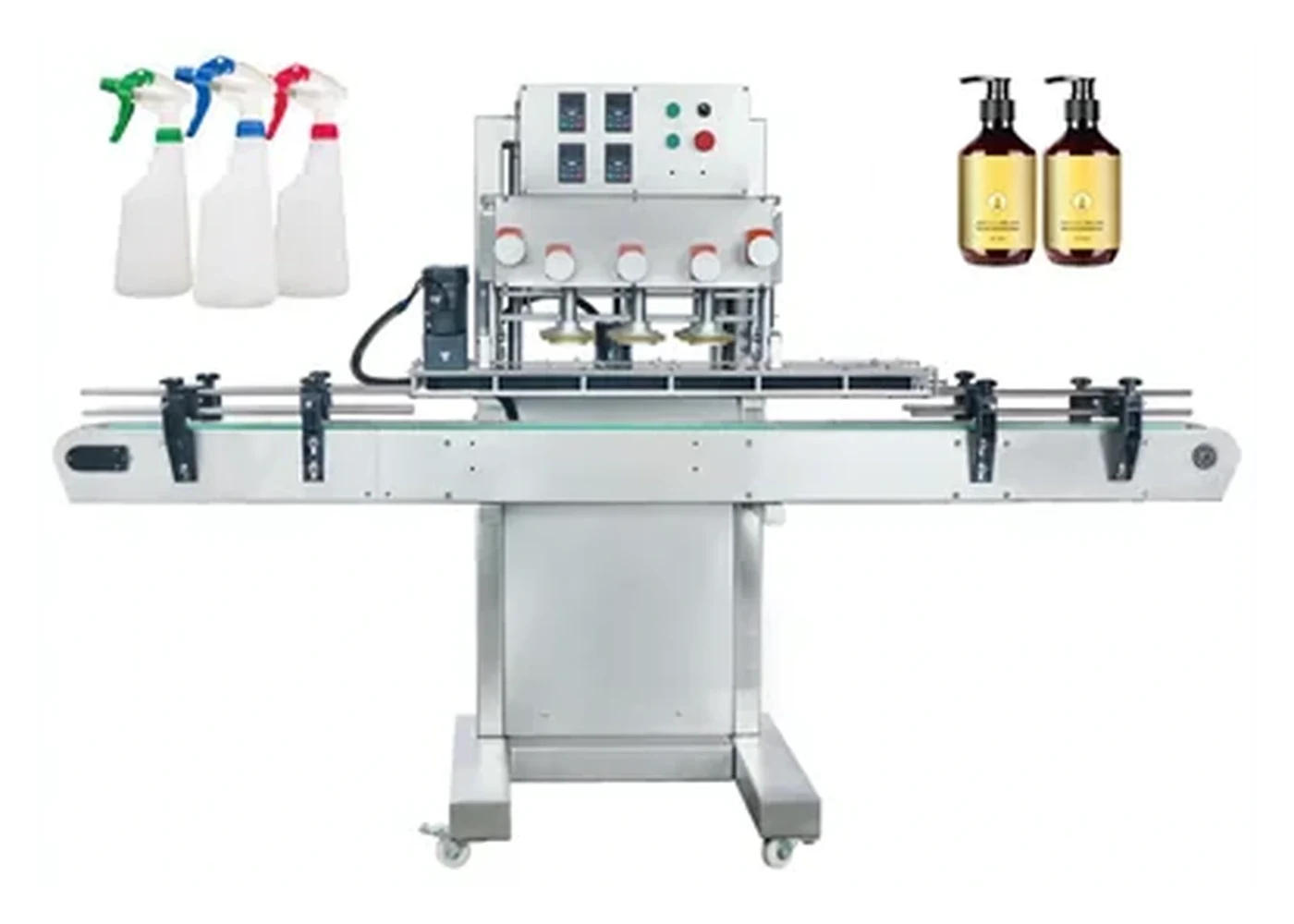
Packaging lines
Packaging Line Conveyors
Conveyor systems for filling, capping, labelling, coding, inspection and packing lines.
Good for linking filling, capping, labelling, coding and packing stages.
Explore packaging line conveyors →Powered belt conveyors
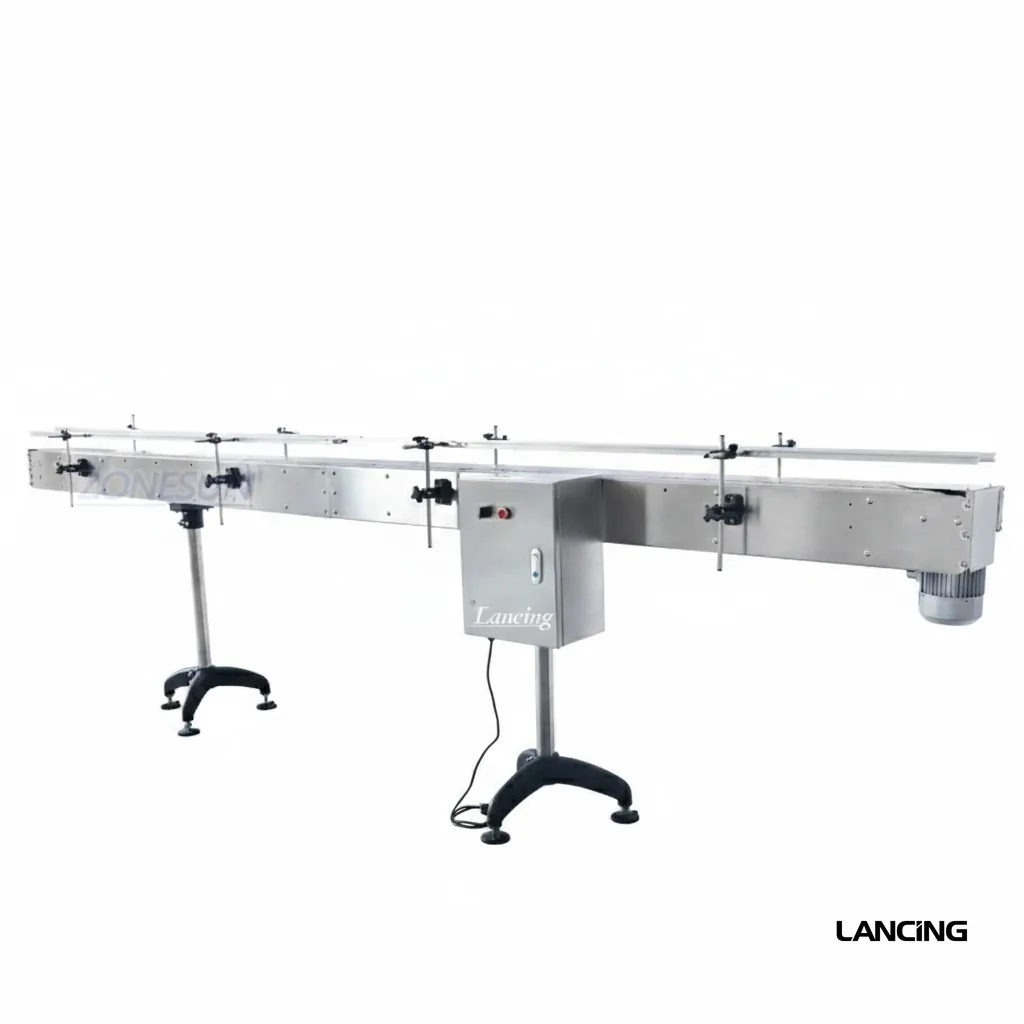
Belt conveyor systems are a practical route for moving packs, components, cartons and products through production, packing and dispatch areas. The right belt format depends on the product base, grip requirement, transfer height, cleaning demand and the upstream and downstream machines it must meet.
Conveyor type
A belt conveyor is often the simplest way to create controlled, powered product movement. It gives a continuous surface under the product, which is useful where cartons, tubs, pouches or unstable packs need support across the full base.
For packaging lines, belt choice should be matched to the product surface, weight, cleaning regime and transfer points. A pack that runs well on a short flat belt may need extra attention at a bend, incline, discharge or interface with a capper, labeller or inspection machine.
Powered Conveyors UK can help define belt width, length, speed, motor position, side guides, access points and installation route so the conveyor fits the real production area rather than only the drawing.
Best used for
Available routes
Conveyor type
Belt conveyors suit many flat-bottomed or supported packs including cartons, trays, tubs, pouches, wrapped products and components. The main checks are product stability, weight, footprint, surface friction and transfer quality.
Yes. Belt conveyors are commonly used between filling, capping, labelling, coding, inspection and packing stages where controlled transfer is needed.
Send the product dimensions and weight, route length, required width, speed, incline angle if relevant, environment, cleaning requirement and details of neighbouring machines.
Need a shortlist?
We will help narrow the conveyor type, layout considerations and the details needed for a practical quotation.
Related conveyor options
Packaging lines
Conveyor systems for filling, capping, labelling, coding, inspection and packing lines.
Good for linking filling, capping, labelling, coding and packing stages.
Explore packaging line conveyors →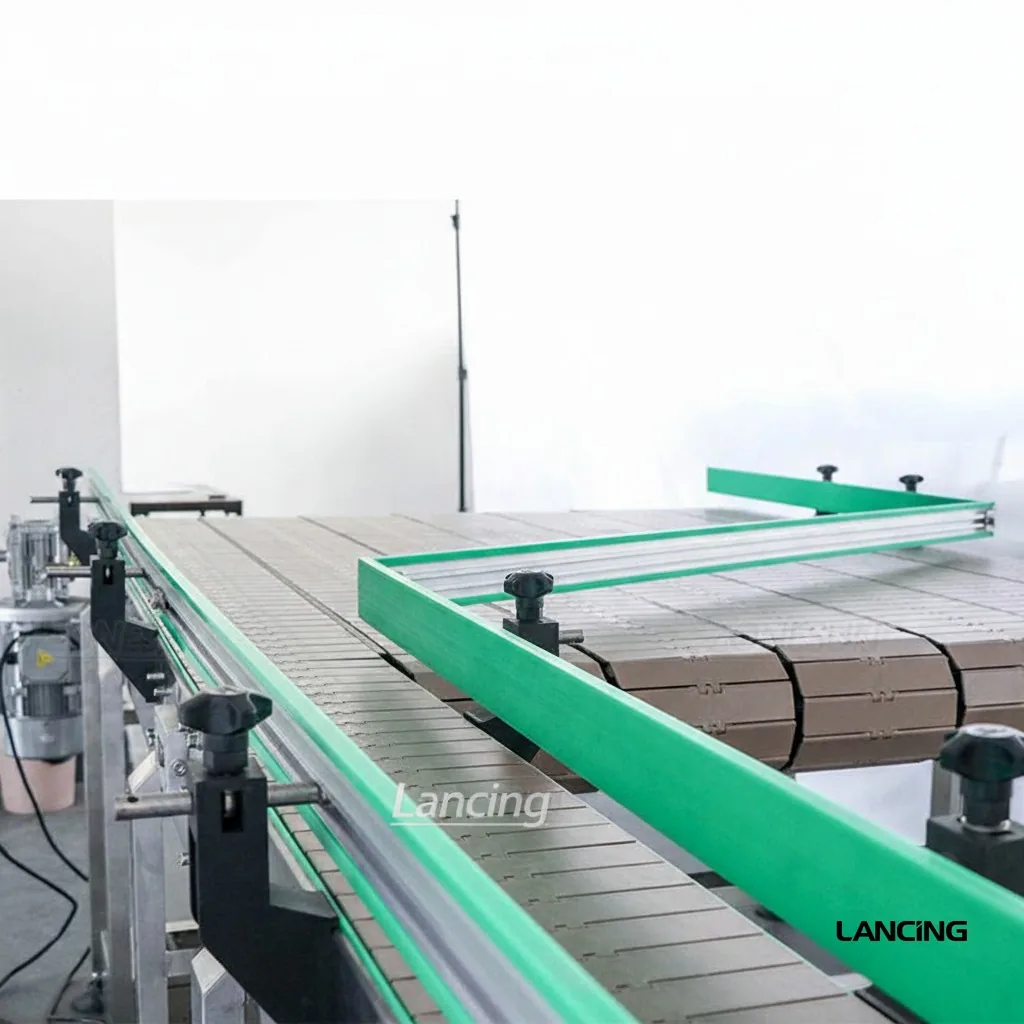
Bottle and jar handling
Slat, infeed, curved and accumulation conveyors for plastic bottles, glass bottles, jars and containers.
Good for stable movement of plastic bottles, glass bottles, jars and containers.
Explore bottle handling conveyors →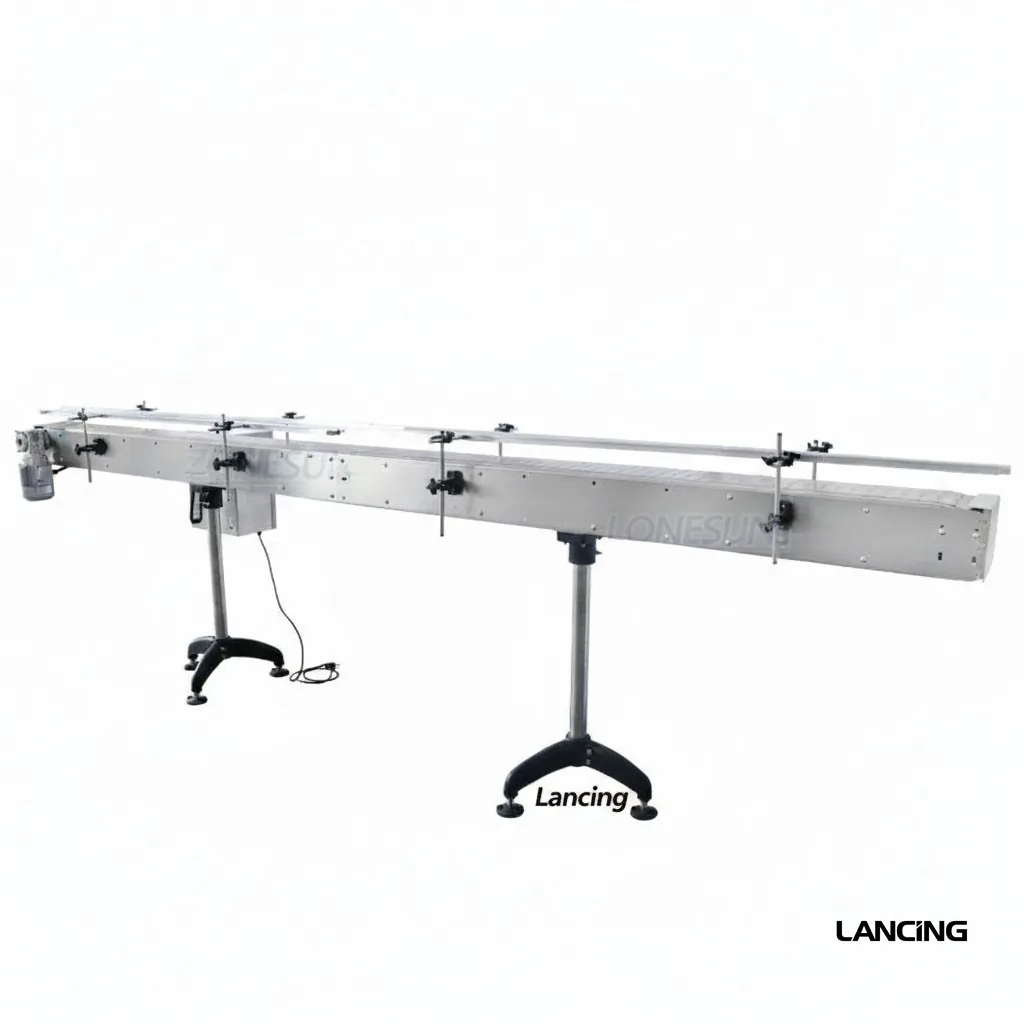
Cartons, trays and boxes
Powered conveyors for flat-bottomed cartons, trays, totes and box handling in production and packing areas.
Good for cartons, trays, totes and boxes in packing and dispatch areas.
Explore carton, tray & box conveyors →Buying guide
How to choose the right powered conveyor system by product, load, footprint, speed and line requirement.
Helps compare conveyor types before you request a quotation.
Explore powered conveyor buying guide →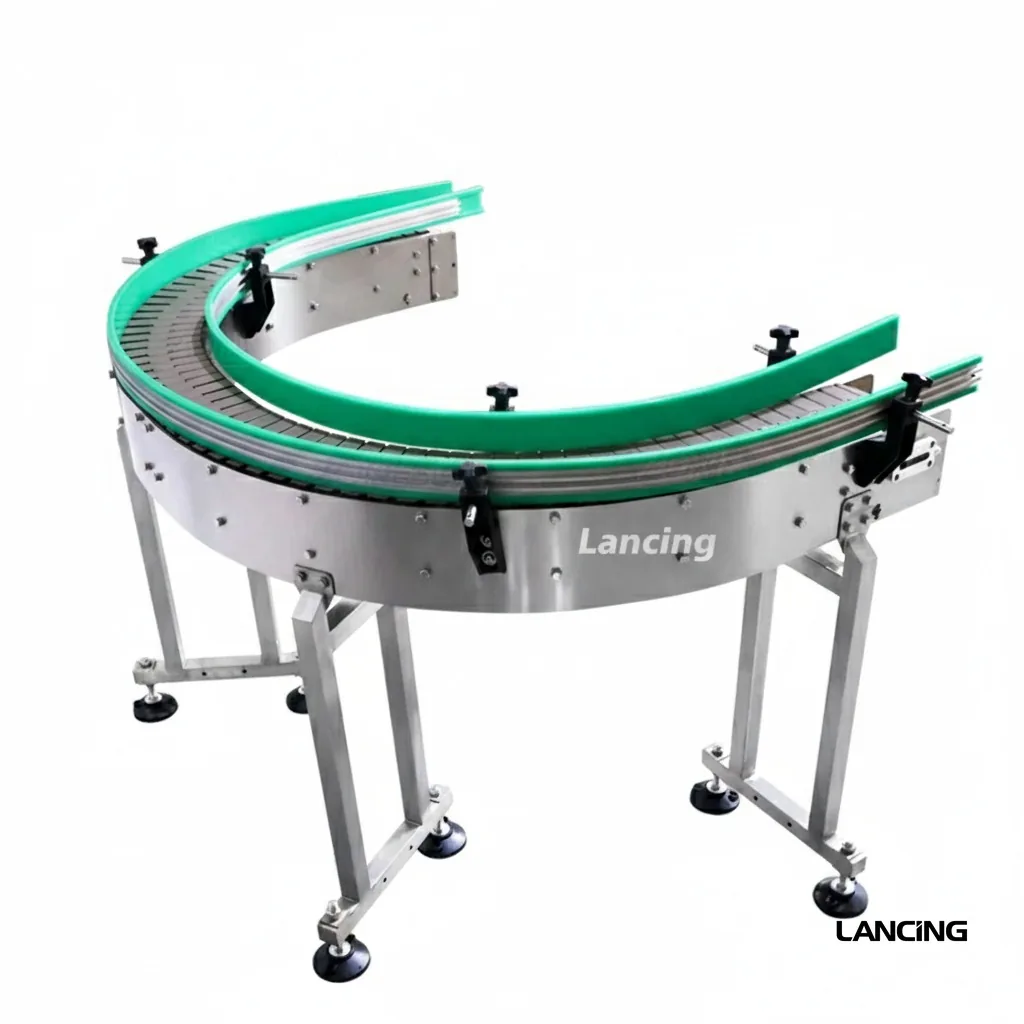
Layout checklist
A checklist covering footprint, access, transfers, bends, elevations, guarding, controls and future growth.
Helps check footprint, access, transfers, bends, heights and controls.
Explore conveyor layout checklist →Belt conveyor engineering
A powered belt conveyor is not selected by length and width alone. The belt surface, slider bed or roller support, pulley arrangement, tracking method, guide contact and transfer geometry all affect how the product moves and how the conveyor can be cleaned and maintained.
Start with the product base and underside material. A rigid carton, flexible pouch, wrapped tray and oily component place different demands on grip and support. The belt must provide enough traction without marking the product or creating unstable acceleration. Where a process can contaminate the belt, define the substance, cleaning method and acceptable retention points before material selection.
The smallest product footprint normally controls the transfer detail. Check the leading edge, base stiffness and centre of gravity as the product crosses from one conveyor to another. Nose bars, reduced pulley diameters, dead plates or overlapping arrangements can reduce unsupported distance, but each option must be reviewed for trapping, cleaning and maintenance access.
Belt width should be based on the widest product plus the actual guide and clearance requirement, not a generic allowance. Adjustable guides should support the pack without squeezing it, and changeover points should be repeatable. Include containers at the minimum and maximum fill level because weight and centre of gravity can change handling behaviour.
The motor and gearbox are selected from conveyor resistance, load, speed, incline, starts, acceleration and service duty. Tracking depends on the frame, pulley alignment, belt construction and loading. Side loading or an off-centre transfer can cause persistent tracking problems even when the belt is correctly tensioned.
| Selection variable | Why it matters | Evidence to provide |
|---|---|---|
| Product base and surface | Controls support, traction and transfer behaviour. | Photos, sample packs and underside material. |
| Load and product pitch | Affects drive duty, frame loading and required surface speed. | Minimum/maximum mass and target products per minute. |
| Cleaning regime | Influences belt material, frame design and access. | Soil type, cleaning chemical, temperature and method. |
| Incline or decline | Changes traction, centre-of-gravity risk and drive force. | Rise, horizontal run and product trial. |
| Neighbouring equipment | Defines transfer height, controls and guarding boundaries. | Interface drawings, photos and signal requirements. |
A powered roller conveyor may be more suitable for firm-based cartons or totes that need zoned accumulation. A slat-chain conveyor can be a better starting point for guided bottles and jars, especially where a compact curve is required. Where the route changes elevation, compare the product trial requirements in the incline conveyor guide.
For calculation methods covering speed, load, incline and drive duty, use the conveyor engineering calculation guide.
Start from required throughput and product pitch, then confirm the result with actual packs. Acceleration, slip, guides, transfers and process dwell can all change the usable speed.
No. Width must suit the product and guide arrangement. Excess width can increase cost and may not solve transfer or centre-of-gravity problems.
Cleats can help retain products on an incline or maintain spacing, but cleat pitch, height, transfer and cleaning must be matched to the product.
Common causes include frame or pulley misalignment, uneven loading, contamination, incorrect tension and side forces at transfers or guides.
Allow safe access for cleaning, inspection, tensioning, tracking, belt removal and drive maintenance without defeating guarding or isolating procedures.
Engineering review
Send the full product range, route, output and interface details so the conveyor can be assessed under realistic operating conditions.
Belt conveyor duty detail
The product does not use every millimetre of the nominal frame width. A practical belt-conveyor specification records the maximum product envelope, required side clearance, guide position, belt tracking allowance and any fixed guarding or structure beside the belt. The same drawing should show how the product is supported as it reaches each pulley and transfer.
| Check | What to measure or observe | Design consequence |
|---|---|---|
| Usable belt width | Maximum product width, lateral wander, guide clearance and changeover range. | Sets the working surface and prevents the product or guides entering the belt-edge allowance. |
| Product underside | Flatness, stiffness, seams, feet, flexible edges and contact area. | Influences support-bed choice, transfer behaviour and whether the product can bridge a nose or pulley gap. |
| Lateral force | Side transfers, guide pressure, manual loading and products arriving out of square. | May require a different belt surface, guide arrangement or a controlled infeed before the main conveyor. |
| Drive duty | Loaded length, starts per hour, acceleration, incline component and normal speed range. | Provides inputs for the motor, gearbox, drive drum and VFD review rather than relying on running speed alone. |
| Cleaning and access | Debris type, cleaning method, removable parts, underside access and safe isolation. | Controls frame detail, return-path access and the position of drives, tensioning and guards. |
Run the smallest, largest, lightest and heaviest products, plus any format with a soft or irregular base. Observe straight running, stop, restart, transfer and any side-loading condition. A belt that moves one nominal sample may still be unsuitable for the least stable format.
Confirm how the belt is tracked and tensioned, which guards must be removed, how debris is recovered and whether routine work can be completed without disturbing an adjacent machine. These details affect availability as much as nominal throughput.
Use the transfer-layout guide for pulley and handover dimensions, the calculation guide for initial speed and line-load checks, and the powered roller conveyor page where a rigid load and zoned accumulation may be a better starting point.