
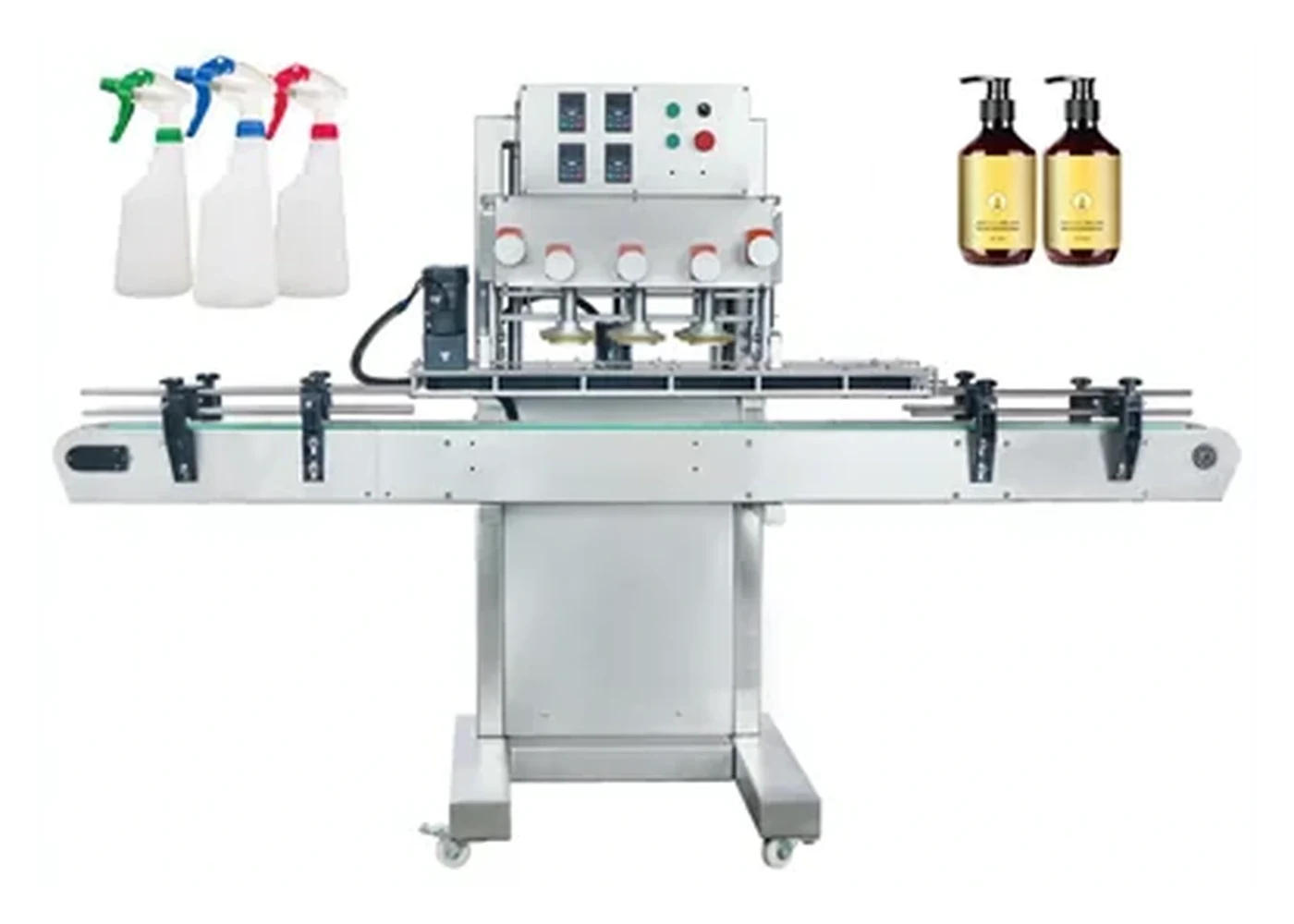
Packaging lines
Packaging Line Conveyors
Conveyor systems for filling, capping, labelling, coding, inspection and packing lines.
Good for linking filling, capping, labelling, coding and packing stages.
Explore packaging line conveyors →Bottle and container handling
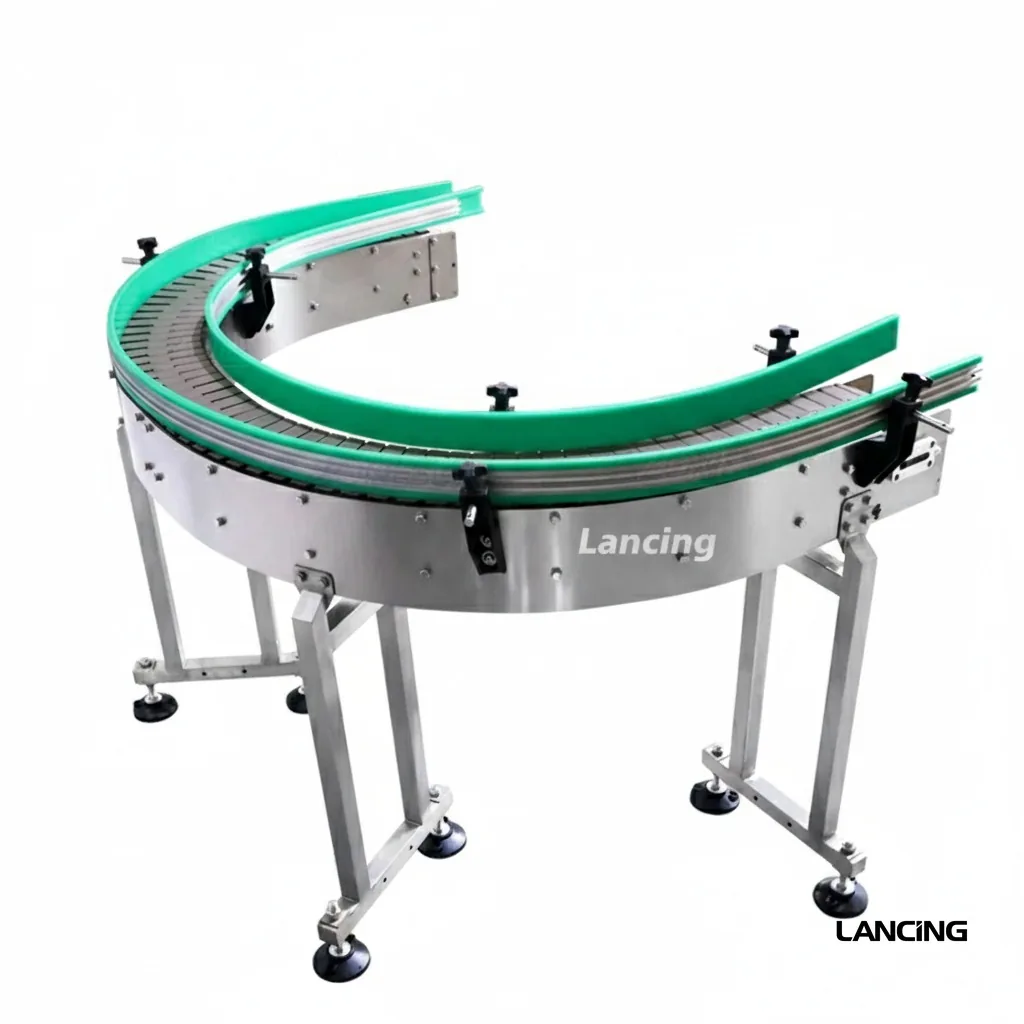
Slat chain conveyors are widely used for bottles, jars and containers because they provide a stable running surface, practical side-guide adjustment and good integration with filling, capping and labelling machines.
Conveyor type
A slat chain conveyor should be specified around container footprint, height, stability and the amount of side guidance required. Tall or lightweight bottles need careful transfer planning so they do not fall or skew at machine interfaces.
The benefit of a slat route is its ability to work through straight sections, bends and compact layouts while maintaining container orientation. This makes it useful where bottles move from unscrambling, filling and capping into labelling, coding or accumulation.
Important design questions include chain width, guide-rail style, product changeovers, wet or dry operation, cleaning access, accumulation pressure and available operator access around the line.
Best used for
Available routes
Conveyor type
Slat chain is often preferred for upright bottles, jars and containers, especially where side guides, curves and compact line layouts are needed.
Often yes, but the guide rails, chain width, transfer points and machine interfaces must be checked for the smallest and largest formats.
Yes. They can form part of an accumulation or buffering layout, but container pressure, stability and line speed must be planned carefully.
Need a shortlist?
We will help narrow the conveyor type, layout considerations and the details needed for a practical quotation.
Related conveyor options
Packaging lines
Conveyor systems for filling, capping, labelling, coding, inspection and packing lines.
Good for linking filling, capping, labelling, coding and packing stages.
Explore packaging line conveyors →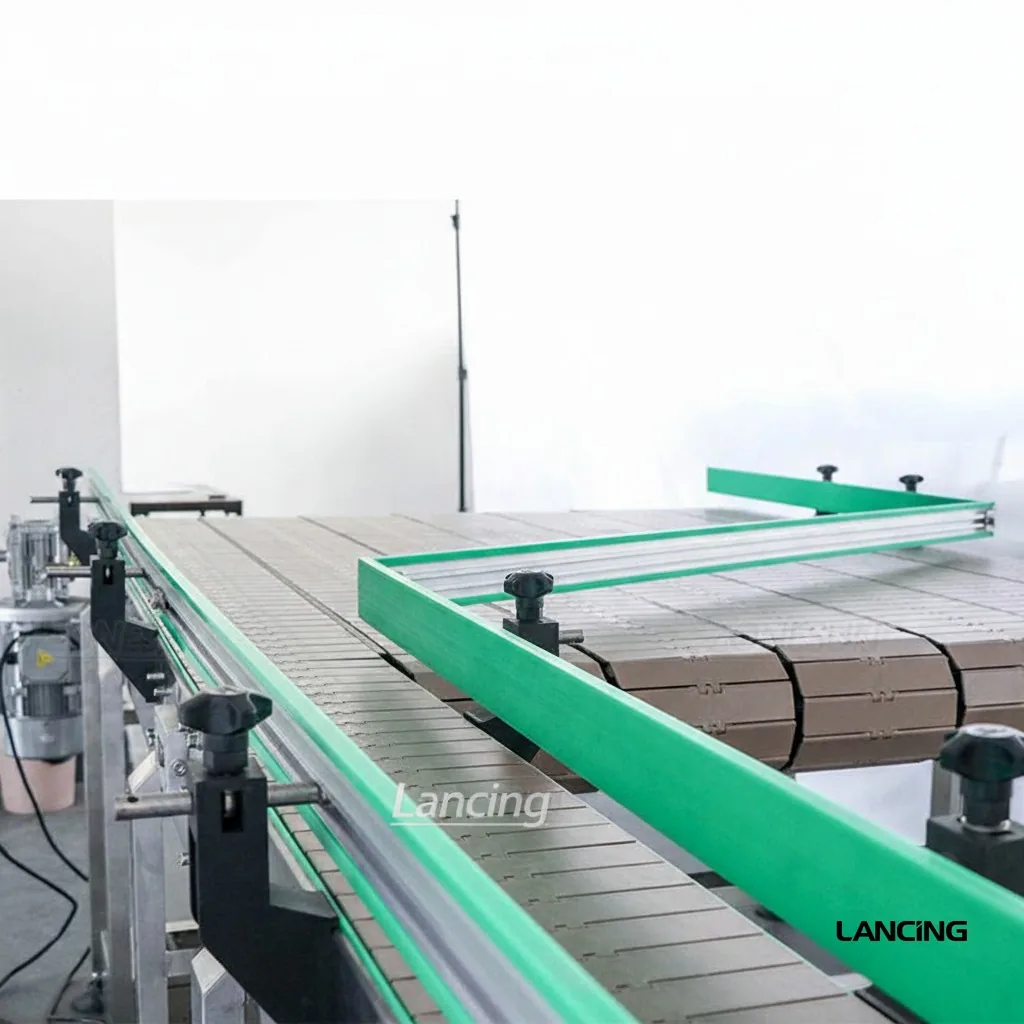
Bottle and jar handling
Slat, infeed, curved and accumulation conveyors for plastic bottles, glass bottles, jars and containers.
Good for stable movement of plastic bottles, glass bottles, jars and containers.
Explore bottle handling conveyors →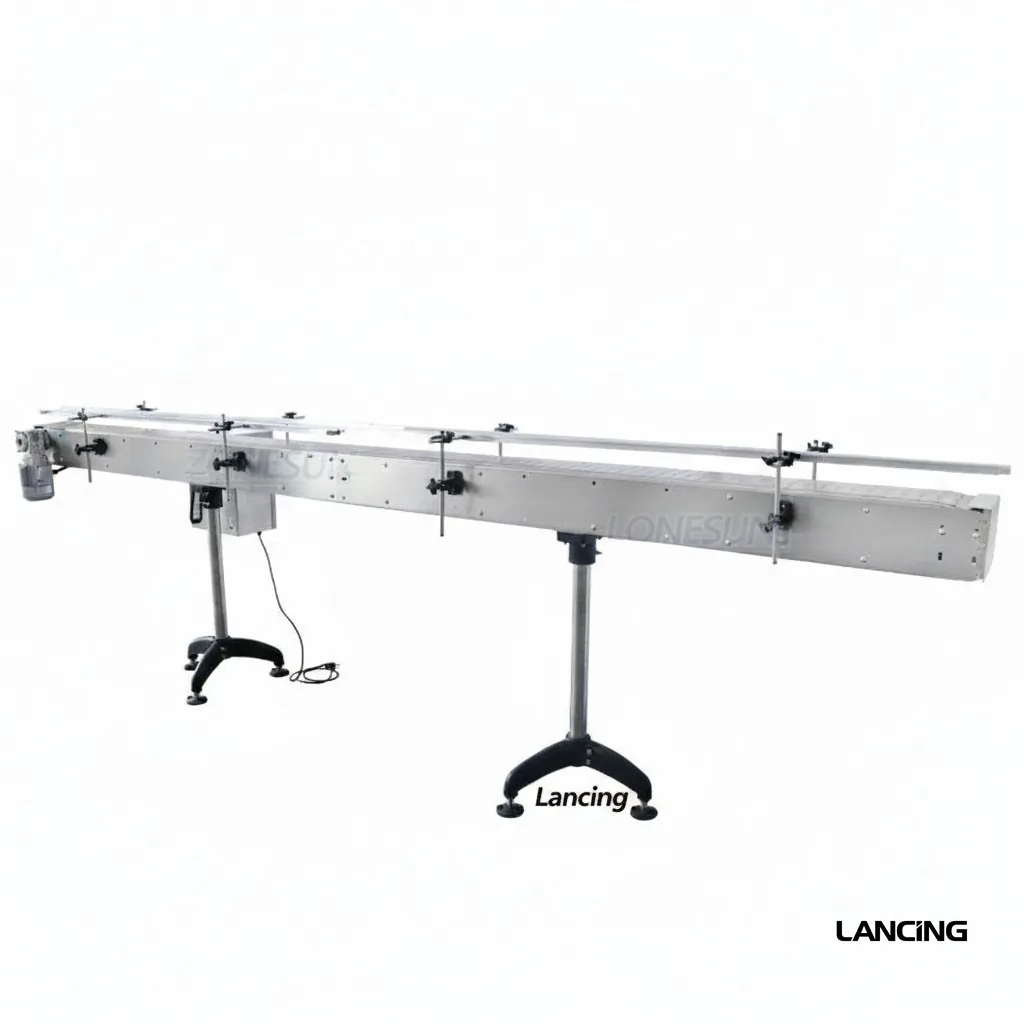
Cartons, trays and boxes
Powered conveyors for flat-bottomed cartons, trays, totes and box handling in production and packing areas.
Good for cartons, trays, totes and boxes in packing and dispatch areas.
Explore carton, tray & box conveyors →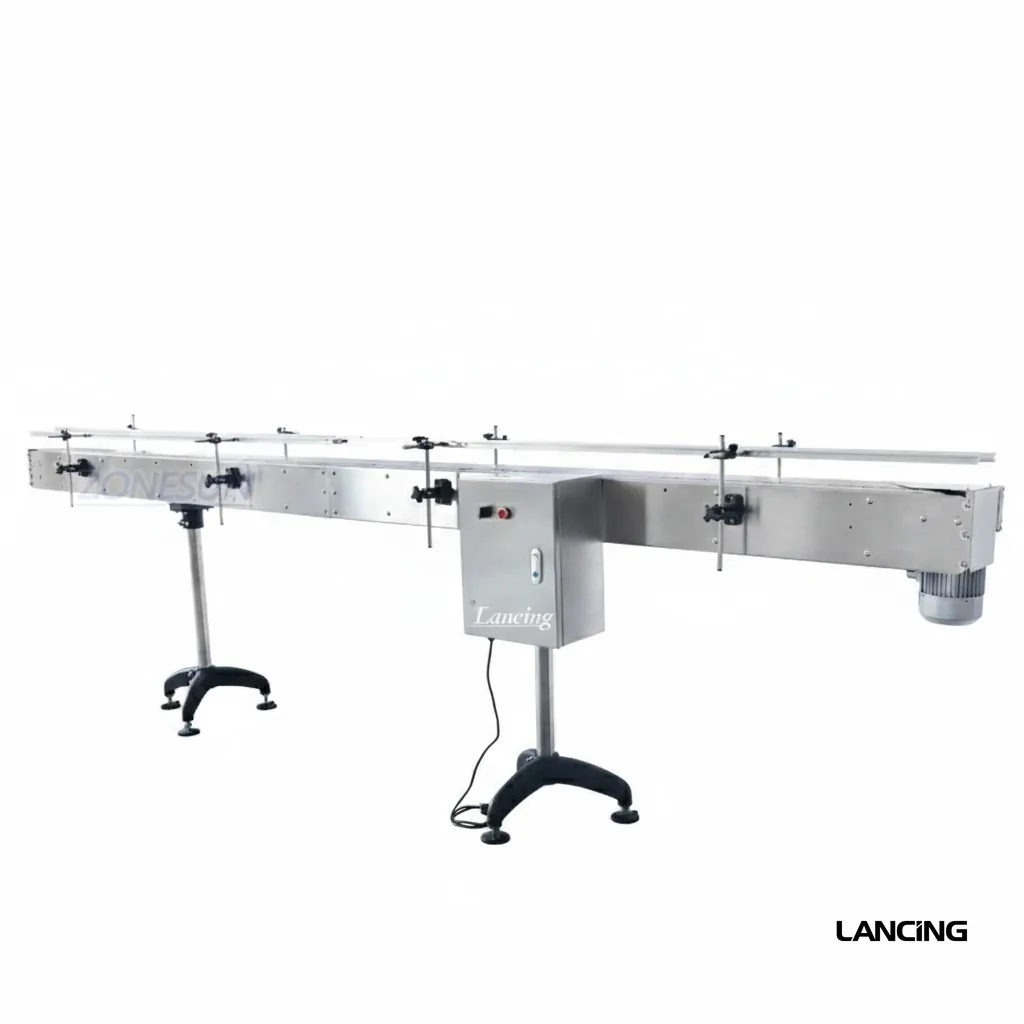
Buying guide
How to choose the right powered conveyor system by product, load, footprint, speed and line requirement.
Helps compare conveyor types before you request a quotation.
Explore powered conveyor buying guide →Layout checklist
A checklist covering footprint, access, transfers, bends, elevations, guarding, controls and future growth.
Helps check footprint, access, transfers, bends, heights and controls.
Explore conveyor layout checklist →Slat-chain conveyor engineering
Slat-chain and tabletop-chain conveyors are commonly selected for bottles, jars and rigid containers because the chain provides a defined support surface and can follow straight or curved routes. Reliable performance depends on the relationship between the container base, chain width, guide geometry, curve radius, speed and the pressure created when containers queue.
Record the full base contact area, any recessed or petaloid features, container height, empty and filled mass, and the position of the centre of gravity. Empty plastic bottles may be easily disturbed by air movement or guide contact, while filled glass containers place higher loads on the chain and transfers.
Guides should constrain the container without creating continuous drag or scuffing. On curves, the inner and outer guide profiles must work with the chain path and container diameter. Tall or top-heavy packs need particular attention because lateral acceleration and contact at the outer guide can promote tipping.
Back-to-back accumulation can create pressure at guides, stops and machine infeed points. Confirm whether products may touch, whether labels or decoration can withstand contact, and how long the buffer must hold. Where contact pressure is unacceptable, controlled or low-pressure accumulation may be needed.
Where several bottle diameters are used, guide adjustment must be repeatable and accessible. Define cleaning chemicals, water exposure, drainage and any product spill before choosing frame, chain and wear-strip materials. Cleaning access must be planned together with guarding and isolation.
| Check | Risk if omitted | Useful evidence |
|---|---|---|
| Base geometry | Rocking, snagging or unstable transfer. | Base photograph, drawing and sample. |
| Guide contact zone | Scuffing, label damage or excessive drag. | Container finish and acceptable contact area. |
| Curve behaviour | Tipping or crowding at the outer guide. | Container height, diameter, mass and speed range. |
| Accumulation method | Excess product pressure and machine-infeed jams. | Required buffer time and contact limitations. |
| Cleaning and spills | Material incompatibility or inaccessible residue. | Cleaning method, chemical and spill description. |
At a filler, capper or labeller, confirm conveyor height, guide opening, machine belt or starwheel interface, sensor position and the required stop/start logic. Dedicated empty-bottle orientation belongs with Bottle Unscramblers UK; a complete filling and closing project belongs with Packaging Lines UK.
Compare curved conveyor routes, accumulation options and the transfer layout guide before fixing the line footprint.
Often yes, but the guide range, chain width, transfer points and changeover method must be checked with the smallest and largest containers.
The chain path and guide geometry control the container. Diameter, height, mass, speed and surface contact all affect stability.
Only when the pack, decoration and process can tolerate contact pressure. Otherwise controlled release or a different accumulation method may be required.
Excess guide pressure, contamination, unsuitable contact materials, crowding and poor changeover settings are common contributors.
Check height, direction, guide opening, sensor and stop positions, transfer support, machine speed and the required interlock signals.
Engineering review
Send the full product range, route, output and interface details so the conveyor can be assessed under realistic operating conditions.
Container control
Slat-chain selection is governed by more than container diameter. The base profile determines surface contact; the centre of gravity affects stability; the guide-contact area controls how the container behaves in curves and queues; and the process state changes mass, rigidity and closure condition. These variables should be recorded for every format that will share the line.
| Operating state | What can change | What to observe during a trial |
|---|---|---|
| Empty container | Low mass, surface static, panel flexibility and high sensitivity to air movement or guide contact. | Entry stability, curve behaviour, guide rubbing and recovery after a stop. |
| Filled and open | Higher mass, raised centre of gravity, product movement and spill risk. | Acceleration, deceleration, incline limits, accumulation pressure and transfer impact. |
| Closed container | Closure height, cap or trigger orientation, label condition and overall rigidity. | Guide clearance, overhead obstructions, queue contact and downstream presentation. |
| Changeover extremes | Minimum/maximum diameter, height and base profile. | Guide adjustment range, retained gaps, dead plates and access for repeatable setup. |
Keep guide transitions progressive and check contact at the actual container height. Excessive side pressure can rotate, mark or destabilise the container, particularly when a queue forms through a curve. The outer and inner guide paths should be reviewed with the largest and smallest formats.
Confirm how debris or liquid can reach the chain return, how wear strips and guides are inspected, and which parts require tools for removal. The approved cleaning method, chemical compatibility and isolation procedure must be agreed for the actual environment rather than inferred from a generic conveyor description.
Use the transfer-layout guide to document dead plates and machine handovers, the controls, safety and washdown guide for environmental questions, and Bottle Unscramblers UK where the project includes bulk bottle orientation before the conveyor infeed.