
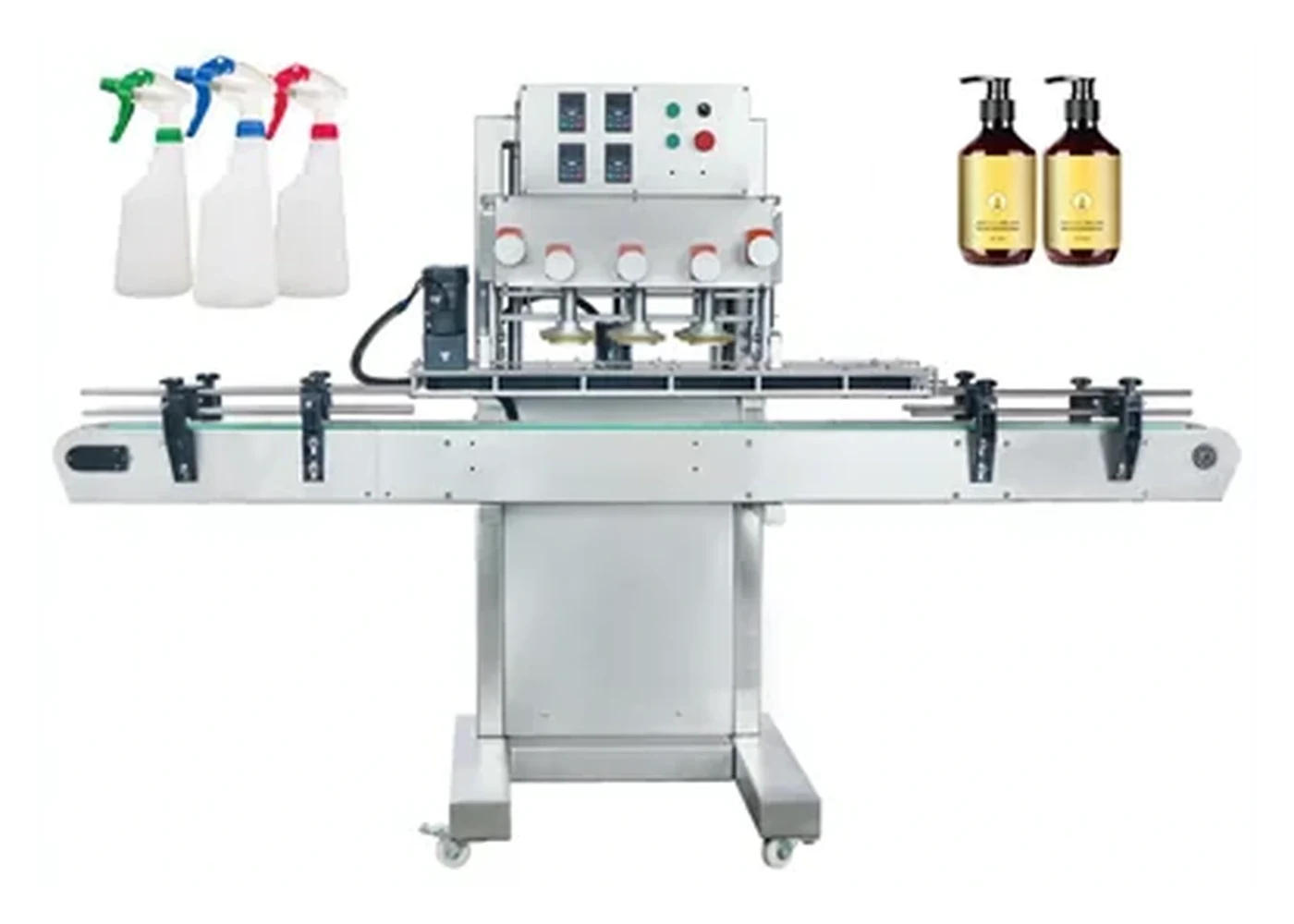
Packaging lines
Packaging Line Conveyors
Conveyor systems for filling, capping, labelling, coding, inspection and packing lines.
Good for linking filling, capping, labelling, coding and packing stages.
Explore packaging line conveyors →Elevation changes and product transfer
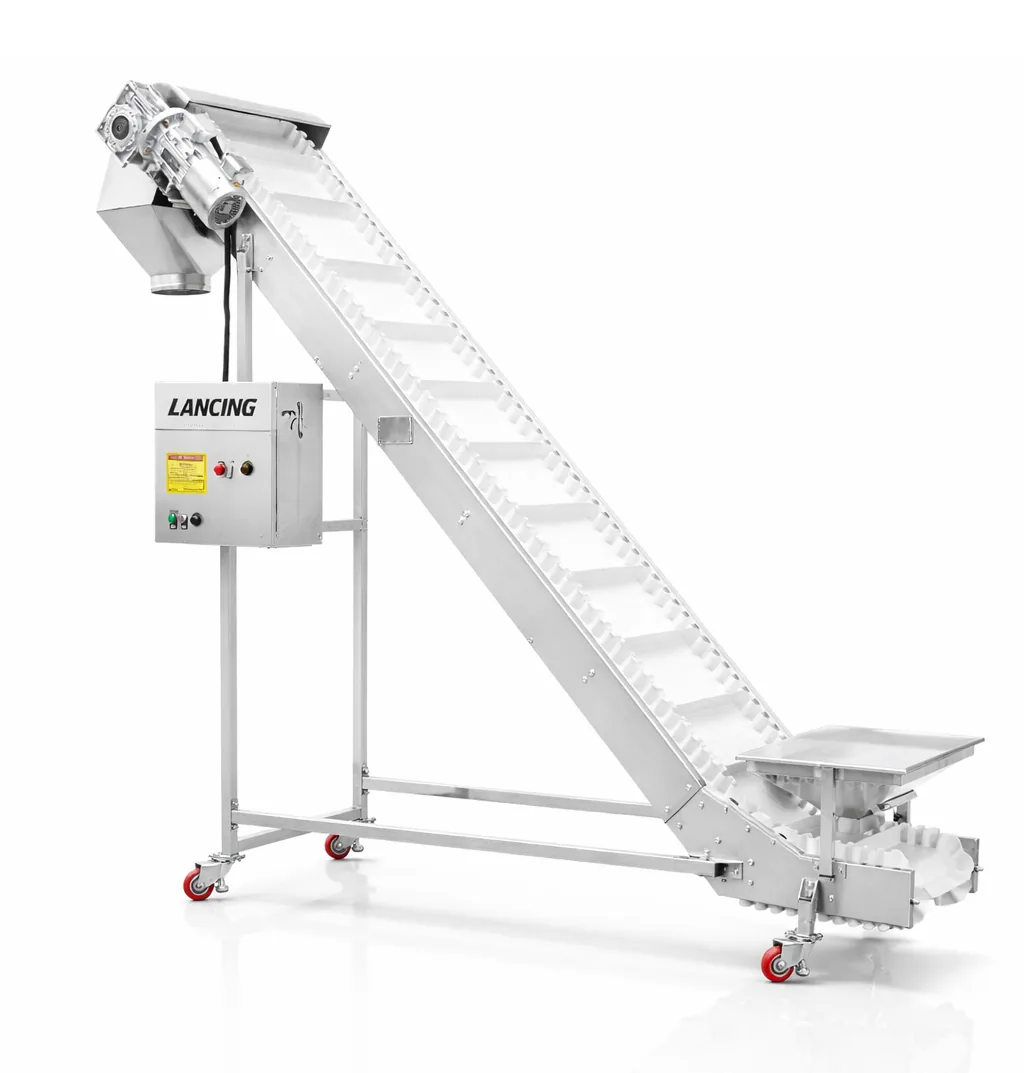
Incline conveyors move products between different heights while maintaining controlled product flow. The correct design depends on incline angle, belt surface, product stability, spacing and discharge point.
Specification notes
Incline conveyor design needs more than a length and height. The product must stay stable on the belt, the incline must not cause rollback, and the discharge must match the receiving machine or working area.
Products with low friction, round bases or unstable shapes may need cleats, flights, sidewalls or a lower angle. Loose materials need additional attention to spillage, cleaning access and feed consistency.
A good incline specification includes the start height, discharge height, available footprint, product dimensions, weight, target speed, cleaning demand and the way operators will access the conveyor.
Best used for
Available routes
Frequently asked questions
The practical angle depends on product stability, surface friction, belt type and whether cleats or flights are used. The quote should be based on the actual product.
Yes. Incline conveyors can feed hoppers, counting systems, weighers, bagging machines and other packaging equipment where height change is needed.
Send product details, required lift height, infeed height, discharge height, available length, speed target and any spillage or cleaning concerns.
Need a shortlist?
We will help narrow the conveyor type, layout considerations and the details needed for a practical quotation.
Related conveyor options
Packaging lines
Conveyor systems for filling, capping, labelling, coding, inspection and packing lines.
Good for linking filling, capping, labelling, coding and packing stages.
Explore packaging line conveyors →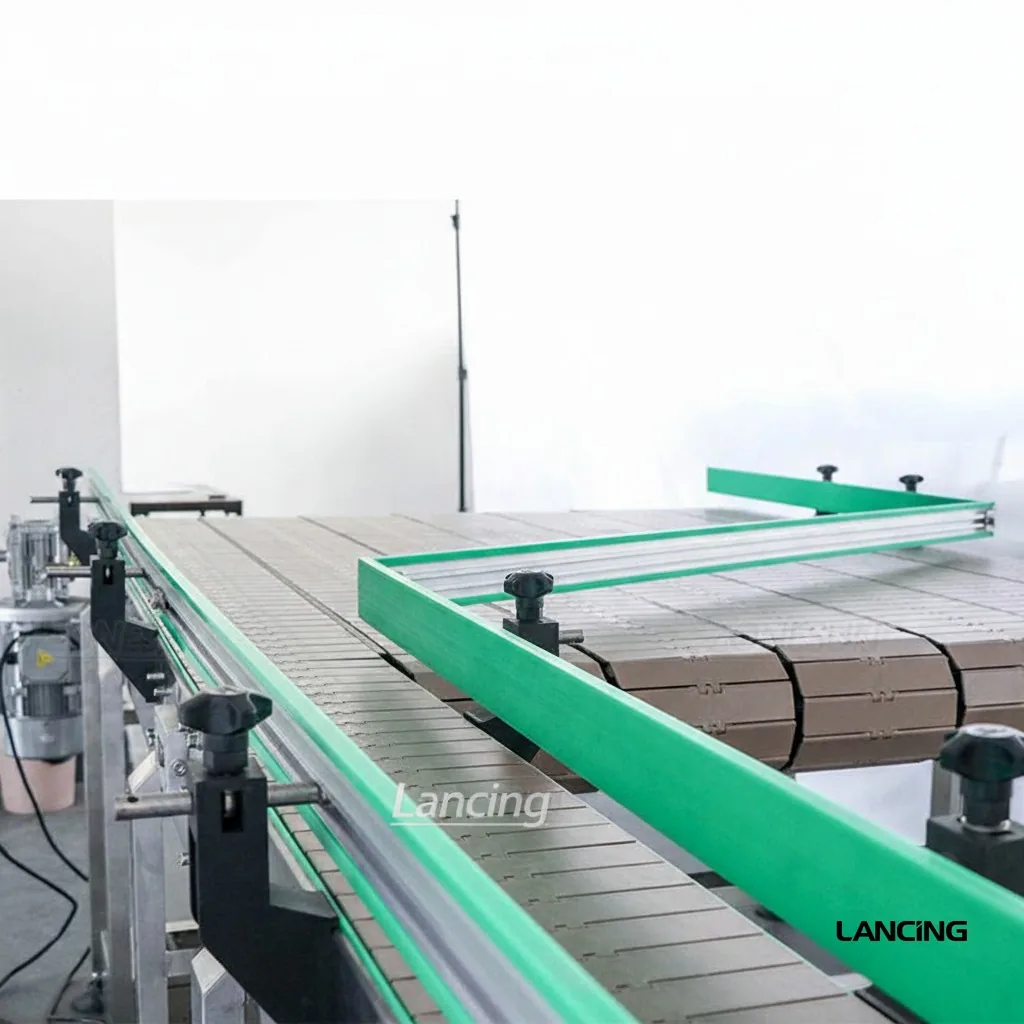
Bottle and jar handling
Slat, infeed, curved and accumulation conveyors for plastic bottles, glass bottles, jars and containers.
Good for stable movement of plastic bottles, glass bottles, jars and containers.
Explore bottle handling conveyors →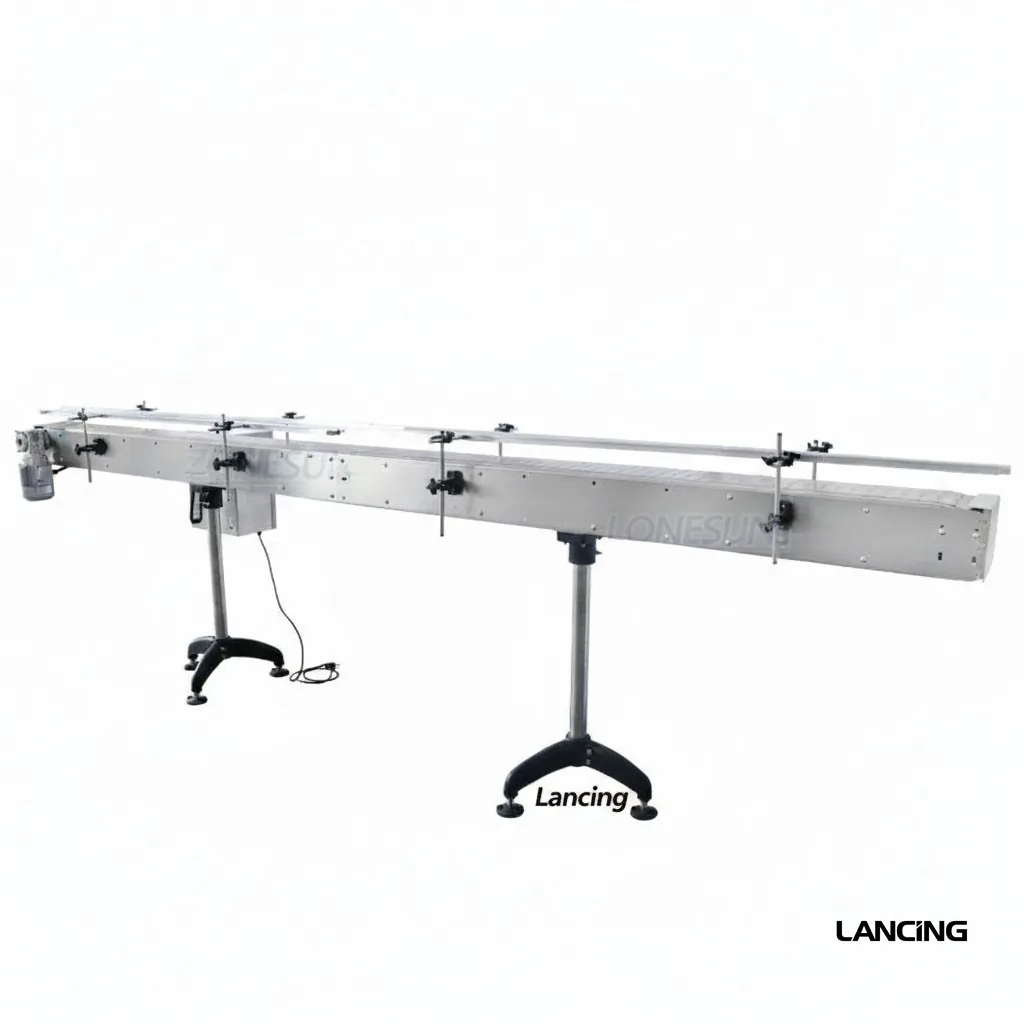
Cartons, trays and boxes
Powered conveyors for flat-bottomed cartons, trays, totes and box handling in production and packing areas.
Good for cartons, trays, totes and boxes in packing and dispatch areas.
Explore carton, tray & box conveyors →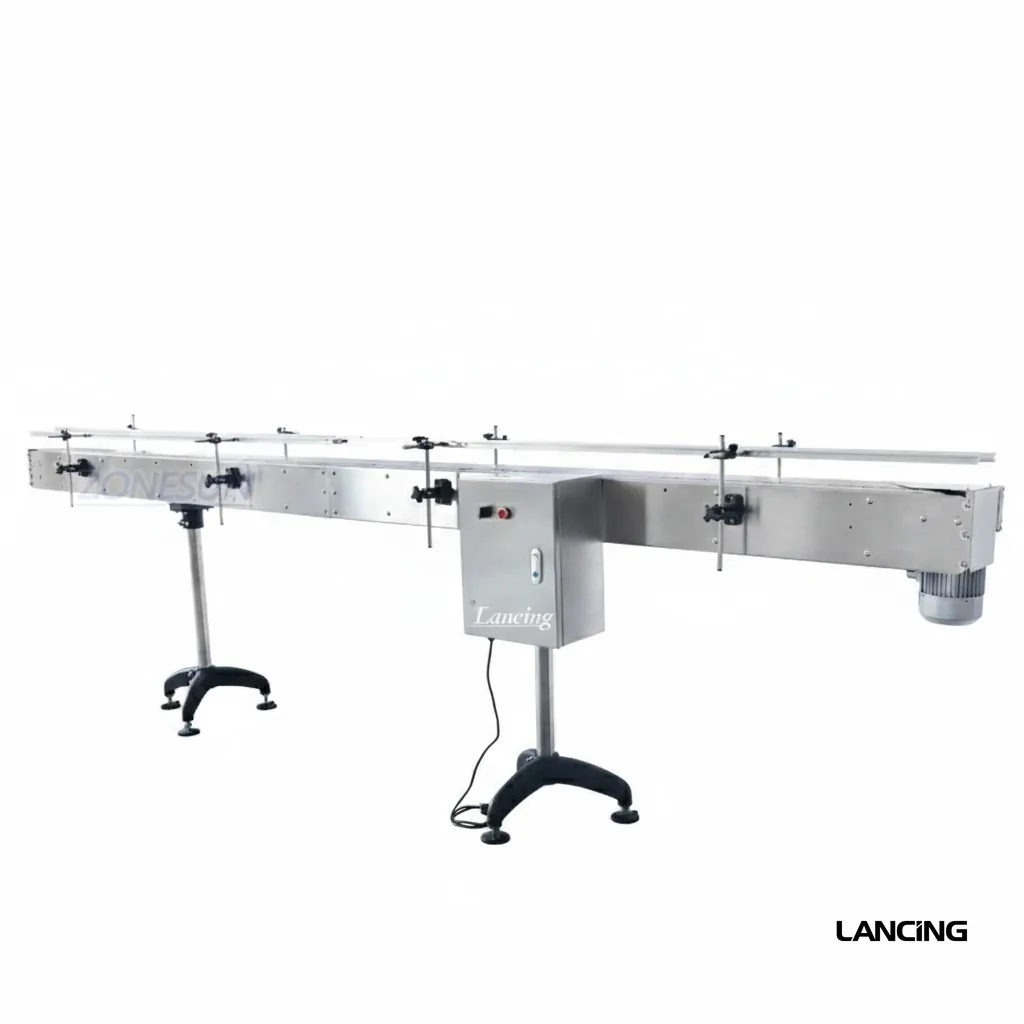
Buying guide
How to choose the right powered conveyor system by product, load, footprint, speed and line requirement.
Helps compare conveyor types before you request a quotation.
Explore powered conveyor buying guide →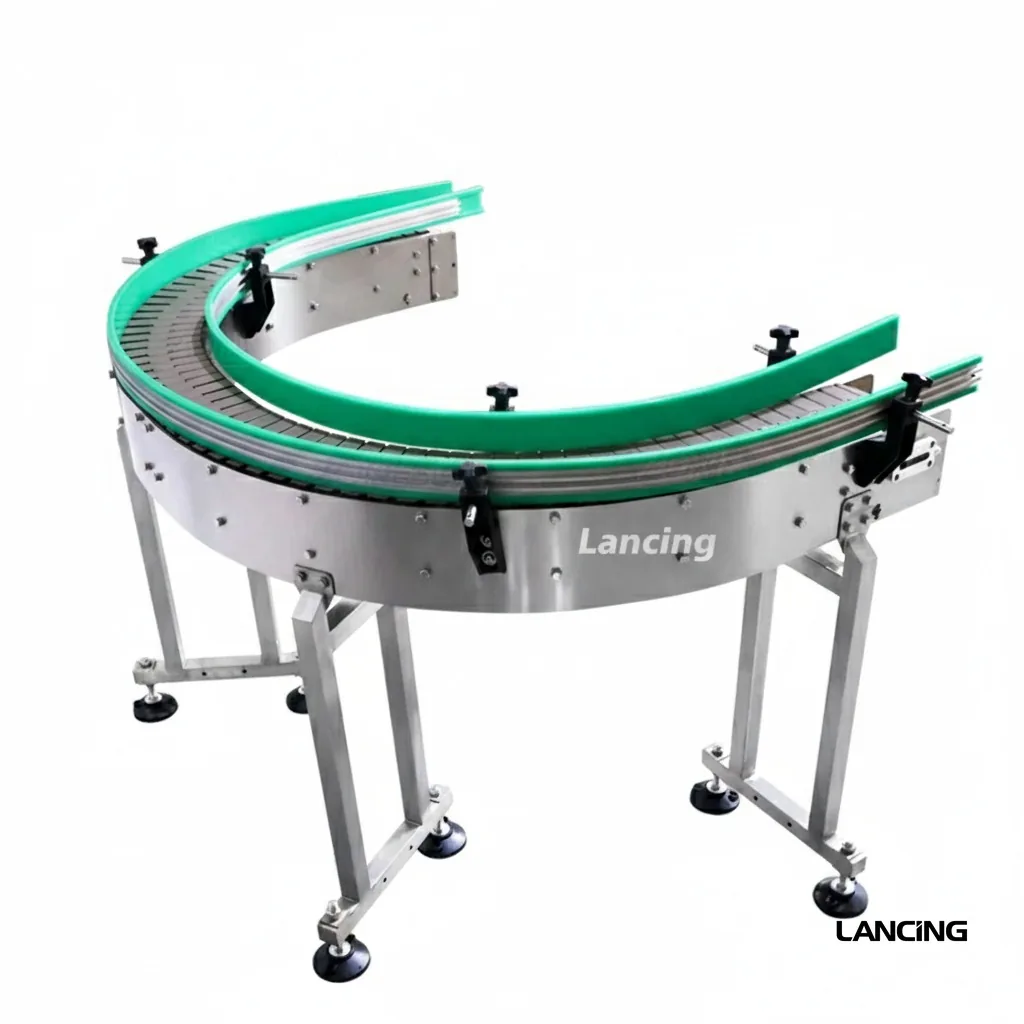
Layout checklist
A checklist covering footprint, access, transfers, bends, elevations, guarding, controls and future growth.
Helps check footprint, access, transfers, bends, heights and controls.
Explore conveyor layout checklist →Incline conveyor engineering
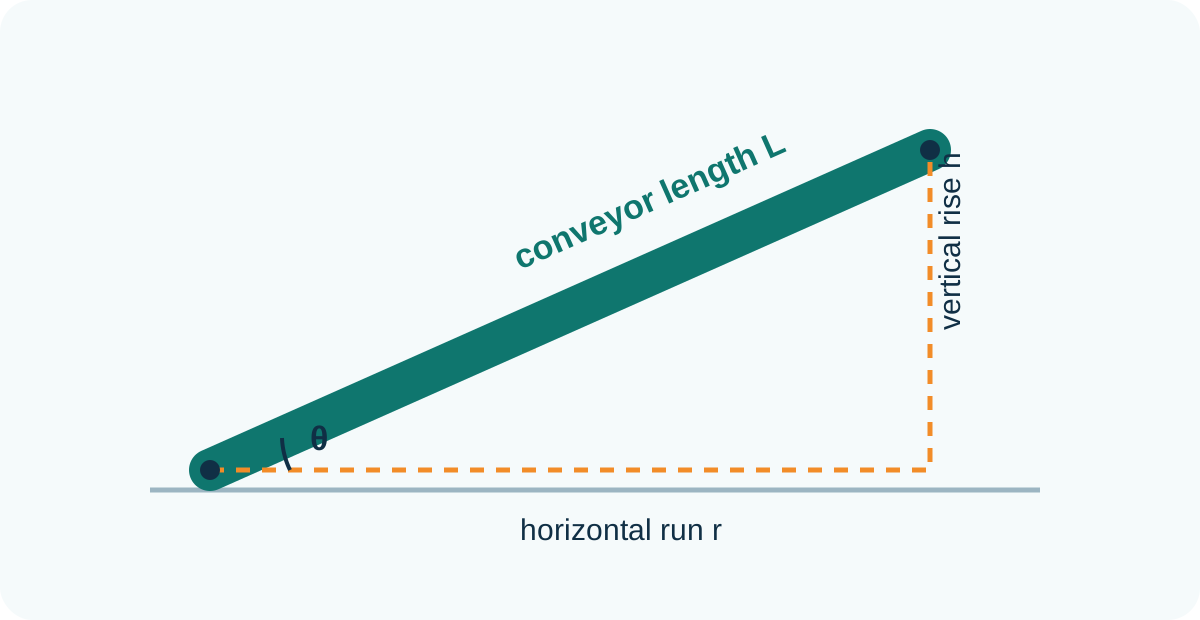
An incline is constrained by the vertical rise, available horizontal run and the way the product contacts the conveying surface. The angle is a result of the site geometry; it should not be chosen in isolation from product grip, centre of gravity, cleats, side restraint and the transfer at each end.
Record rise, horizontal run, entry height and discharge height. The conveyor length and angle can then be calculated geometrically. Allow space for the drive, tensioning, guarding, access and the transition from horizontal travel into the incline.
Use the lightest and heaviest products, together with the least favourable underside condition. Wet, dusty, oily or polished bases can reduce traction. A container that is stable when full may behave differently when empty.
Cleats can maintain spacing and resist rollback, but their pitch must suit product length and transfer sequence. Sidewalls or guides may be needed, while tall products may require a lower angle or a different route to control centre-of-gravity movement.
The drive must overcome the lifting component of the loaded conveyor as well as belt or chain resistance and starting duty. Maintenance access, guarding, isolation and any risk from a product falling back should be addressed in the machine risk assessment.
A longer, shallower incline may improve product stability but needs more floor space. A cleated belt may control discrete products, while a different lift or elevation technology may be more appropriate where the route is very steep or the product cannot tolerate the transition. The correct choice depends on a product trial and the site risk assessment.
Use the incline calculation guide, transfer layout details and belt conveyor selection guide together.
The angle is the arctangent of vertical rise divided by horizontal run. The actual product suitability must still be confirmed by trial.
Not always, but cleats are often considered where friction alone cannot maintain position. Product geometry and transfer behaviour decide the final arrangement.
They can in suitable arrangements, but height, base, centre of gravity, guide contact and rollback risk require careful assessment.
Loaded mass, angle, conveyor resistance, speed, acceleration, starts, belt or chain type and overall drive efficiency all contribute.
Test the minimum and maximum products at the intended angle, speed, spacing, start/stop condition and realistic surface condition.
Engineering review
Send the full product range, route, output and interface details so the conveyor can be assessed under realistic operating conditions.
Incline operating states
The geometric angle identifies the route, but product behaviour depends on friction, centre of gravity, belt surface, cleat spacing, acceleration and the discharge transition. A representative trial should reproduce every operating state expected in production, including a stopped conveyor carrying the maximum credible load.
| State | Questions to answer | Evidence to retain |
|---|---|---|
| Infeed | Does the product reach the incline square, at the correct gap and without striking a cleat? | Side and plan video with product pitch and infeed speed recorded. |
| Steady travel | Does the product slip, rock, rotate or load against a side guide? | All product extremes at the intended speed range and loading condition. |
| Stopped under load | Can the product and conveyor remain in position without rollback or unsafe movement? | Defined stop test, load condition and control response. |
| Restart | Does acceleration cause slip, tipping, belt movement or sudden impact against a cleat? | Restart from the least favourable loaded position. |
| Discharge | Is the product supported as it leaves the incline, and is its speed compatible with the next machine? | Dimensioned transfer detail and downstream operating test. |
| Fault or isolation | How is stored energy controlled and how can a trapped product be removed safely? | Approved risk assessment, isolation method and access plan. |
Measure vertical rise and horizontal run from controlled reference points, then record top-of-conveyor heights, available transition length and the required clearances around the route. Cleats or flights can provide positive support, but their height, pitch and shape must suit the product and the infeed timing. They do not remove the need to assess centre of gravity, containment and safe discharge.
Motor and gearbox review should include the lifted load, conveyor resistance, efficiency, acceleration, starts per hour, expected speed range and any holding or braking requirement. Final component selection must use the selected manufacturers’ data and the project risk assessment.
Calculate the initial route with the incline geometry tool and dimension the discharge using the transfer-layout guide.